
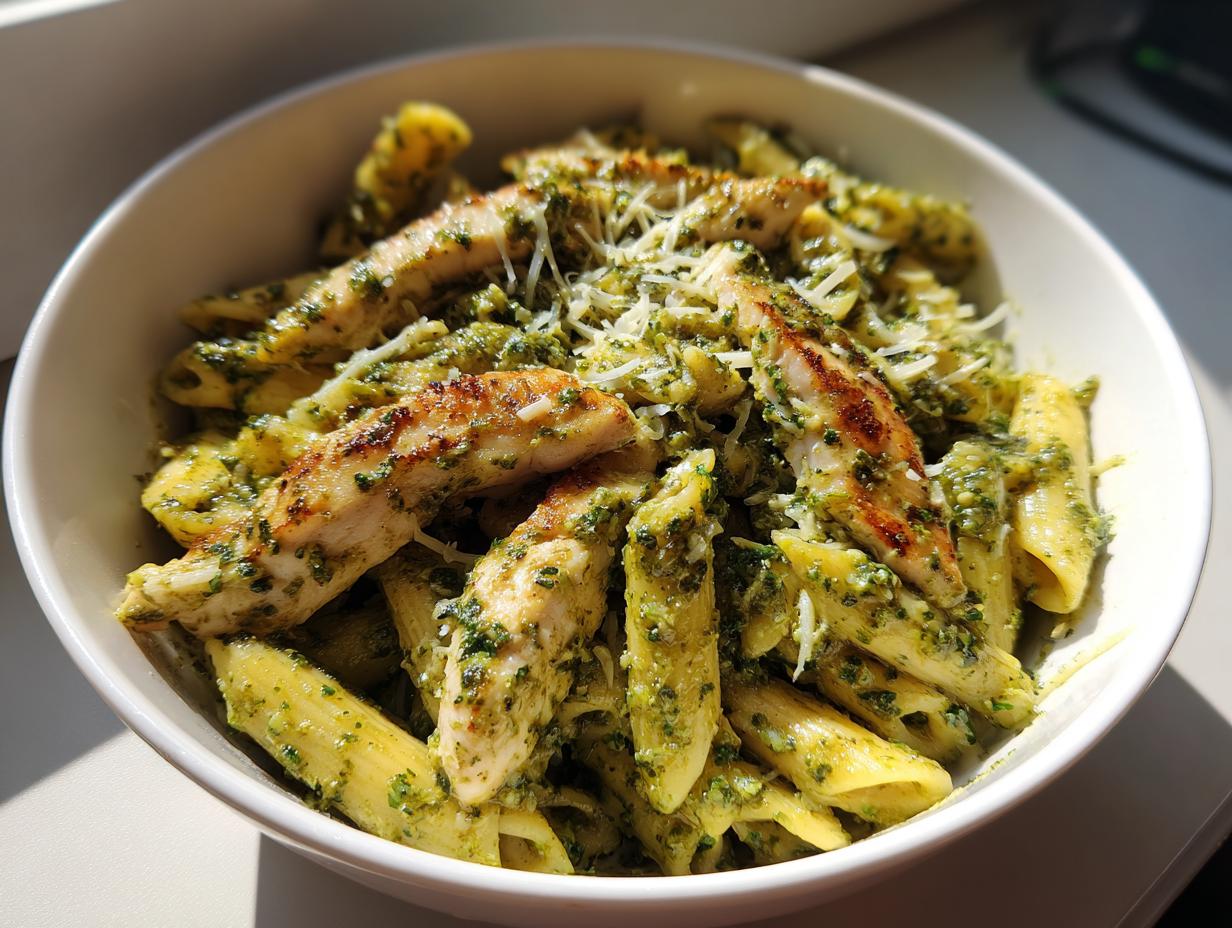
You know those nights when you’re staring into the fridge wondering what magic you can whip up in 30 minutes? That’s where my pesto chicken pasta comes to the rescue. This dish has saved more weeknight dinners than I can count – it’s my go-to when I need something flavorful, fast, and satisfying with minimal cleanup. The combination of juicy chicken and pesto-coated pasta feels fancy but couldn’t be simpler.
I first stumbled upon this combo during my college days when I was juggling classes and part-time work. One exhausted evening, I tossed leftover rotisserie chicken with store-bought pesto and whatever pasta was in my cupboard. The result? Pure magic that’s stayed in my regular rotation for a decade. Now as a busy mom, I’ve perfected the method – browning fresh chicken breasts adds so much more flavor, and that golden garlic-infused olive oil takes it to restaurant quality.
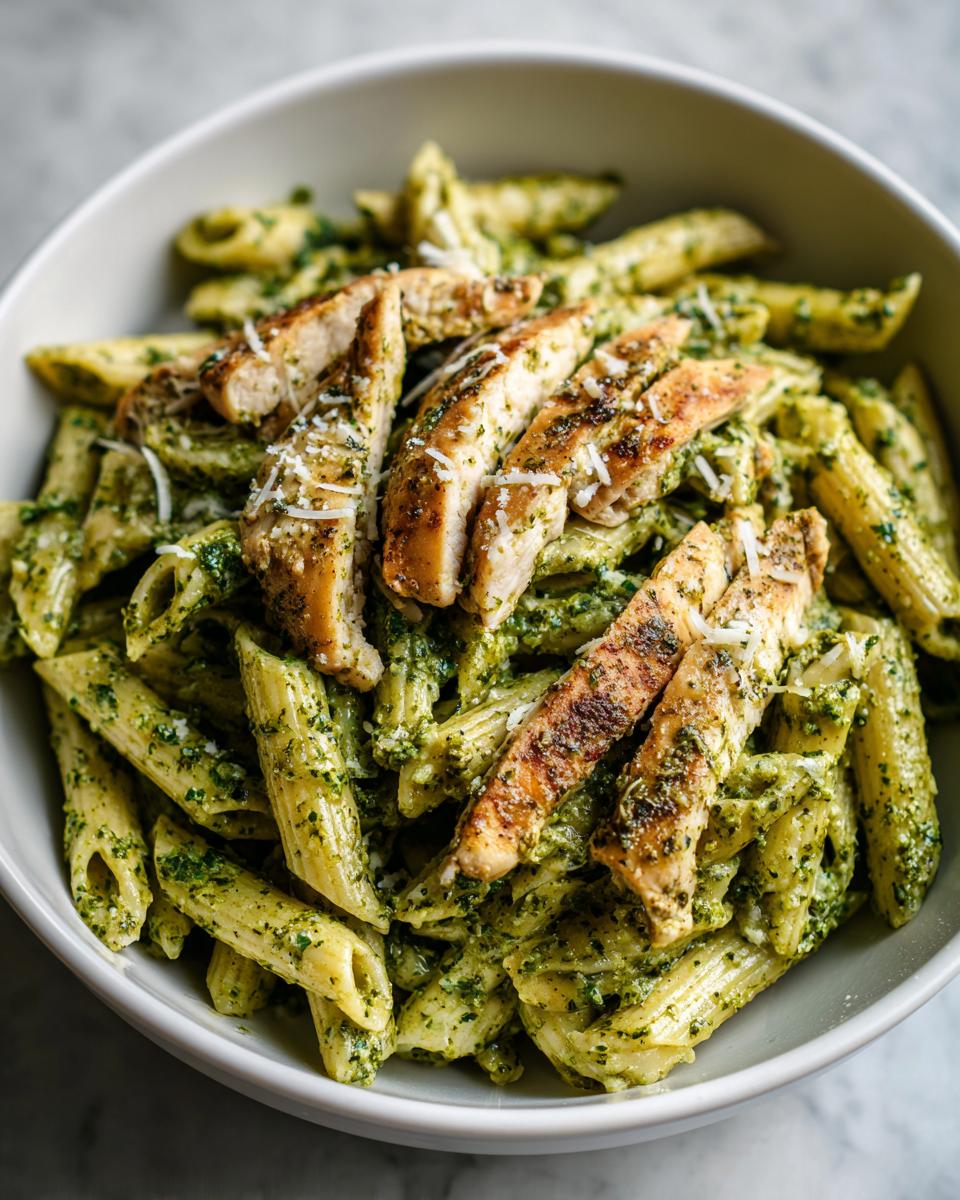
What makes this pesto chicken pasta special is how adaptable it is. Don’t have penne? Use whatever shape’s in your pantry. Out of fresh basil? Jarred pesto works in a pinch. It’s the kind of recipe that welcomes improvisation while still delivering big, herbaceous flavors every single time.
Why You’ll Love This Pesto Chicken Pasta
This recipe has been my weeknight warrior for years, and here’s why it’ll become your new favorite too:
- Dinner in a flash: From fridge to table in under 30 minutes – faster than takeout!
- Perfectly balanced flavors: The garlicky olive oil, herb-packed pesto, and juicy chicken create layers of flavor that taste way more complex than the effort required.
- Endless versatility: Swirl in some cream for richness, add cherry tomatoes for freshness, or swap chicken for shrimp – it’s endlessly adaptable.
- One-pan wonder: Minimal cleanup means more time to actually enjoy your evening (and maybe even seconds!).
Honestly, pesto chicken pasta is the kind of dish that makes people think you spent hours cooking when really, you were just being smart with your time.
Pesto Chicken Pasta Ingredients
What I love about this recipe is how few ingredients you need to create something truly delicious. Here’s everything that goes into my favorite pesto chicken pasta – and trust me, each one plays a crucial role:
- 2 boneless, skinless chicken breasts (about 6 oz each) – look for plump, evenly sized ones that’ll cook uniformly
- 8 oz pasta (penne or fusilli are my top picks – their nooks hold the pesto beautifully)
- 1/2 cup packed basil pesto (homemade is divine, but a good-quality jarred version works wonders in a pinch)
- 2 tbsp olive oil – extra virgin for that fruity flavor that makes all the difference
- 2 cloves garlic, minced (about 1 tbsp) – fresh is non-negotiable here
- 1/4 cup grated parmesan cheese – the real stuff, not the powdered kind
- Salt and freshly ground black pepper to taste – I’m generous with both
A quick pro tip: Let your chicken breasts sit at room temperature for 10-15 minutes before cooking. Room temp meat cooks way more evenly than straight-from-the-fridge cold. And when mincing that garlic? Press the flat side of your knife over each clove first – the skins practically fall right off!
How to Make Pesto Chicken Pasta
Alright, let me walk you through my foolproof method for making pesto chicken pasta – I promise it’s easier than you think! The key is timing everything just right so your pasta’s ready when your chicken is. Here’s exactly how I do it:
Step 1: Cook the Pasta
First, get a big pot of salted water boiling – seriously, salt it like the sea! This is your only chance to season the pasta itself. Drop in your penne or fusilli and set your timer for 1 minute less than the package says. You want it al dente – still with a tiny bite – because it’ll keep cooking a bit when we mix it with the pesto later. When it’s done, drain it but save about 1/2 cup of that starchy pasta water. Trust me, that liquid gold helps the pesto cling to every noodle.
Step 2: Sauté the Garlic
While the pasta cooks, heat your olive oil in a large skillet over medium-low heat. Add the minced garlic and stir constantly for about 30 seconds – just until it becomes fragrant. Watch it like a hawk! Garlic burns crazy fast and turns bitter. The moment you smell that wonderful garlicky aroma, move to the next step. (My grandma used to say, “Garlic should sing, not scream!” and she was absolutely right.)
Step 3: Cook the Chicken
Turn up the heat to medium-high and add your chicken breasts to that garlic-infused oil. Season generously with salt and pepper. Cook for about 6-7 minutes per side until beautifully golden and the internal temperature hits 165°F on a meat thermometer. Don’t poke it too much – let it develop that gorgeous crust! Once done, transfer the chicken to a plate and let it rest for 2 minutes before slicing. This keeps all those delicious juices inside where they belong.
Step 4: Combine with Pesto
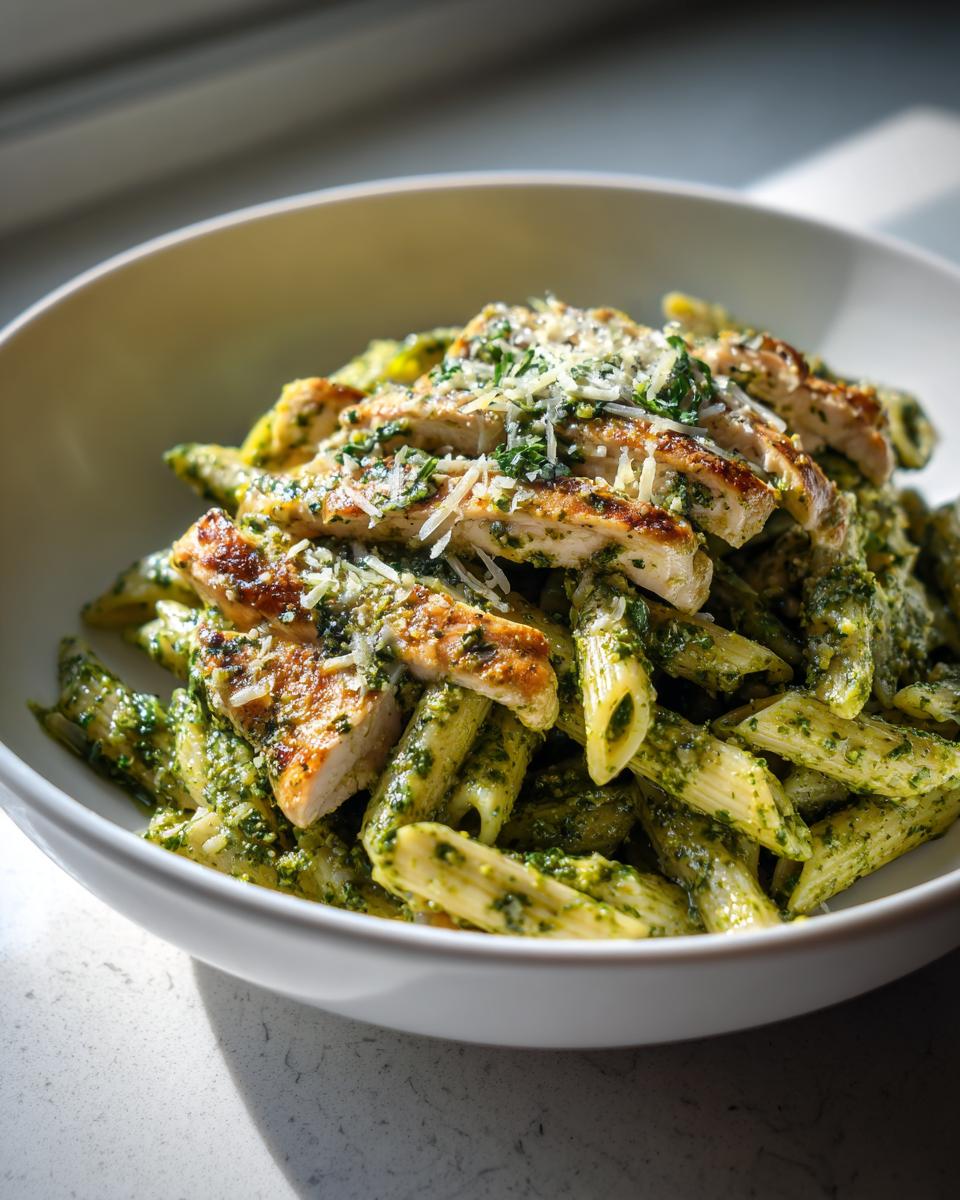
Now the magic happens! Return your drained pasta to the pot (off the heat) and add the pesto. Stir vigorously to coat every single piece – if it looks too thick, add a splash of that reserved pasta water to loosen it up. The starch helps create this velvety sauce that clings perfectly. Then arrange those gorgeous chicken slices on top, sprinkle with freshly grated parmesan, and prepare for compliments!
Expert Tips for Perfect Pesto Chicken Pasta
After making this dish countless times (and learning from my mistakes!), I’ve nailed down a few insider tricks that take pesto chicken pasta from good to “wow, can you teach me how to make this?” levels. Here are my absolute must-know pro tips:
Never skip the pasta water
That starchy liquid gold is the secret weapon for restaurant-quality pesto chicken pasta every time. I keep a mug right by my colander to catch about 1/2 cup before draining. The starch helps emulsify the pesto into a silky sauce that clings to every noodle. If your mixture looks too thick when combining, add the reserved water 1 tablespoon at a time until perfectly glossy.
Fresh basil makes all the difference
While jarred pesto works in a pinch, I swear by fresh basil leaves when I have time. I’ll blend a big handful with garlic, pine nuts, olive oil, and parmesan for homemade pesto that tastes vibrantly green. The flavor difference is night and day! Store leftovers under a layer of olive oil to keep that bright color.
Slice chicken against the grain
Here’s a game-changer my Italian neighbor taught me: after resting the chicken, look for those parallel muscle fibers and cut perpendicular to them. This breaks up the fibers, making each bite incredibly tender instead of stringy. I angle my knife diagonally too – it creates prettier slices that soak up more pesto flavor.
Bonus tip: If your pesto chicken pasta seems too oily, toss in a handful of baby spinach or arugula right at the end. The greens help balance the richness while adding fresh texture. You’re welcome!
Pesto Chicken Pasta Variations
One of the best things about pesto chicken pasta? It’s practically begging for you to make it your own! I’ve experimented with countless versions over the years – here are my favorite twists that still keep that delicious pesto flavor at the center:
Veggie-loaded versions
Try tossing in a handful of sun-dried tomatoes for that sweet-tart punch – their chewy texture pairs amazingly with the chicken. Roasted red peppers or sautéed mushrooms work wonders too. Last summer, I got addicted to adding charred corn kernels and zucchini ribbons – so fresh and colorful!
Protein swaps
Don’t have chicken? No problem. Shrimp cooks up in minutes for a seafood twist (just add them right after the garlic and cook until pink). For meatless nights, chickpeas or white beans add great texture. And if you’re feeling fancy, seared scallops turn pesto chicken pasta into date-night material.
Cheese variations
While parmesan is classic, I sometimes mix in crumbled goat cheese for creaminess or pecorino for extra saltiness. A friend swears by stirring in ricotta for an ultra-creamy version – I tried it and wow, she wasn’t wrong!
The key with any variation? Keep tasting as you go. Pesto chicken pasta welcomes creativity, but you’ll want to adjust seasoning accordingly. More veggies might need extra salt, while richer cheeses may call for a squeeze of lemon to brighten things up. Happy experimenting!
Serving Suggestions
Now that you’ve got this gorgeous pesto chicken pasta ready, let’s talk about what to serve with it! Over the years, I’ve found some perfect pairings that turn this dish into a complete meal without stealing the spotlight from that beautiful pesto flavor.
The bread situation
You gotta have something to sop up any leftover pesto clinging to your plate! My go-to is garlic bread – but not just any garlic bread. I take a crusty baguette, slice it diagonally (more surface area for butter!), and toast it with a mix of butter, minced garlic, and a sprinkle of that same parmesan you used in the pasta. The crunch contrasts perfectly with the tender pasta.
Simple greens for balance
A crisp salad cuts through the richness beautifully. My favorite is just baby arugula with lemon juice, olive oil, and flaky salt – the peppery greens and citrus brighten everything up. If I’m feeling fancy, I’ll add shaved fennel or paper-thin radish slices for extra crunch.
Veggie sides that shine
Roasted asparagus or broccolini are pesto’s best friends. Toss them in olive oil, salt, and pepper, then roast at 425°F until the edges get crispy. The caramelized bits play so nicely with the fresh herb flavors in the pasta. Bonus? They cook in the same time it takes to make the main dish!
Pro tip: If you’re serving pesto chicken pasta for guests, keep the sides simple. You want them to focus on that gorgeous green pasta and juicy chicken – not overwhelm their plates with too many competing flavors. A basket of warm bread and a small salad is all you really need!
Storing and Reheating Pesto Chicken Pasta
Let’s be real – sometimes you make pesto chicken pasta and miraculously have leftovers (or maybe you’re smart and double the recipe like I often do). Here’s exactly how to keep it tasting fresh and delicious for round two:
Fridge storage that keeps flavors bright
First, let your pesto chicken pasta cool slightly – but not completely! I transfer mine to an airtight container within about 20 minutes of cooking. Leaving pasta out too long lets the pesto oxidize and turn that unappetizing brown color. A little trick I learned? Press plastic wrap directly onto the surface before sealing the lid to limit air exposure. Stored this way, it stays vibrant green and tasty for up to 3 days.
The best reheating methods
Microwave reheating tends to dry out the chicken and make the pasta gummy. Instead, I gently reheat portions in a skillet with a splash of water or chicken broth over medium-low heat. Stir frequently until warmed through – this keeps everything moist and evenly heated. If the pesto looks a bit separated, stir in a teaspoon of fresh olive oil to bring it back to life.
For single servings at work? I pack the pasta with a damp paper towel on top before microwaving. The steam helps prevent that dreaded dried-out texture. Always give it a good stir halfway through and add a sprinkle of fresh parmesan right before eating – makes all the difference!
Important note: The chicken will be safest if reheated to 165°F, but honestly? I often eat leftover pesto chicken pasta cold straight from the fridge – it makes an amazing pasta salad! Just add some fresh cherry tomatoes or cucumber slices for crunch.
Pesto Chicken Pasta Nutrition
Let’s talk numbers, because even though this pesto chicken pasta tastes indulgent, it’s actually pretty balanced! Keep in mind these are estimates – your exact nutrition will vary based on the specific ingredients you use (especially whether you go for homemade or store-bought pesto). But here’s the general breakdown per serving that makes me feel good about enjoying this dish:
- Calories: 650
- Protein: 38g (that chicken really delivers!)
- Carbohydrates: 55g
- Fiber: 3g
- Sugar: 3g
- Fat: 32g
- Saturated Fat: 6g
- Sodium: 480mg
- Cholesterol: 85mg
A few quick notes from my kitchen experiments: Using whole wheat pasta bumps up the fiber to about 5g per serving. And if you’re watching sodium, homemade pesto with less salt can cut that number nearly in half. The olive oil and parmesan contribute to the fat content, but remember – these are the good, flavorful fats that make this dish so satisfying!
Honestly? For a meal this quick and delicious, the nutrition profile is pretty stellar. It’s got protein, carbs for energy, and enough healthy fats to keep you full. That’s what I call a win-win dinner!
Common Pesto Chicken Pasta Questions
Over the years, I’ve gotten so many questions about my pesto chicken pasta recipe – and I love helping people troubleshoot! Here are the answers to the most common things readers ask me:
Can I use frozen chicken breasts?
Absolutely! Just thaw them completely first (overnight in the fridge works best). Frozen-to-thawed chicken tends to release more moisture, so pat it very dry with paper towels before cooking. You might need an extra minute per side too – frozen chicken sometimes cooks slower. Pro tip: If you’re in a pinch, seal the frozen breasts in a ziplock bag and submerge in cold water for quicker thawing.
How can I make this gluten-free?
Easy peasy! Just swap regular pasta for your favorite gluten-free variety – I’ve had great results with brown rice or chickpea pasta. The key is cooking it al dente since GF pasta can turn mushy fast. And double-check your pesto ingredients – some brands add wheat as a thickener. My homemade pesto is naturally gluten-free (just basil, nuts, oil, garlic, and cheese).
Why does my pesto turn brown?
Ah, the dreaded pesto oxidation! Basil is super sensitive to air exposure. To keep that vibrant green color, mix the pesto into hot pasta right away – the heat helps stabilize the color. If storing leftovers, press plastic wrap directly on the surface before sealing the container. A squeeze of lemon juice in the pesto also helps slow browning. Don’t worry though – it still tastes amazing even if it darkens a bit!
Bonus tip I get asked all the time: Yes, you can absolutely freeze pesto chicken pasta! Portion it into airtight containers (leave some space for expansion) and it’ll keep for about 2 months. Thaw overnight in the fridge before reheating gently on the stove with a splash of water or broth.
Print
Pesto Chicken Pasta: 30-Minute Meal Magic You’ll Crave
- Total Time: 25 mins
- Yield: 2 servings 1x
- Diet: Low Lactose
Description
A quick and flavorful dish combining tender chicken with pesto-coated pasta for a satisfying meal.
Ingredients
- 2 boneless, skinless chicken breasts
- 8 oz pasta (penne or fusilli recommended)
- 1/2 cup basil pesto
- 2 tbsp olive oil
- 2 cloves garlic, minced
- 1/4 cup grated parmesan cheese
- Salt and pepper to taste
Instructions
- Cook pasta according to package instructions. Drain and set aside.
- Heat olive oil in a pan over medium heat. Add minced garlic and sauté for 30 seconds.
- Add chicken breasts to the pan. Cook for 6-7 minutes per side until fully cooked.
- Remove chicken, let rest for 2 minutes, then slice into strips.
- Toss cooked pasta with pesto until evenly coated.
- Top pasta with sliced chicken and sprinkle with parmesan cheese.
Notes
- Use store-bought or homemade pesto.
- Add cherry tomatoes or spinach for extra flavor.
- Leftovers keep well in the fridge for up to 3 days.
- Prep Time: 10 mins
- Cook Time: 15 mins
- Category: Main Course
- Method: Stovetop
- Cuisine: Italian
Nutrition
- Serving Size: 1/2 recipe
- Calories: 650
- Sugar: 3g
- Sodium: 480mg
- Fat: 32g
- Saturated Fat: 6g
- Unsaturated Fat: 22g
- Trans Fat: 0g
- Carbohydrates: 55g
- Fiber: 3g
- Protein: 38g
- Cholesterol: 85mg