
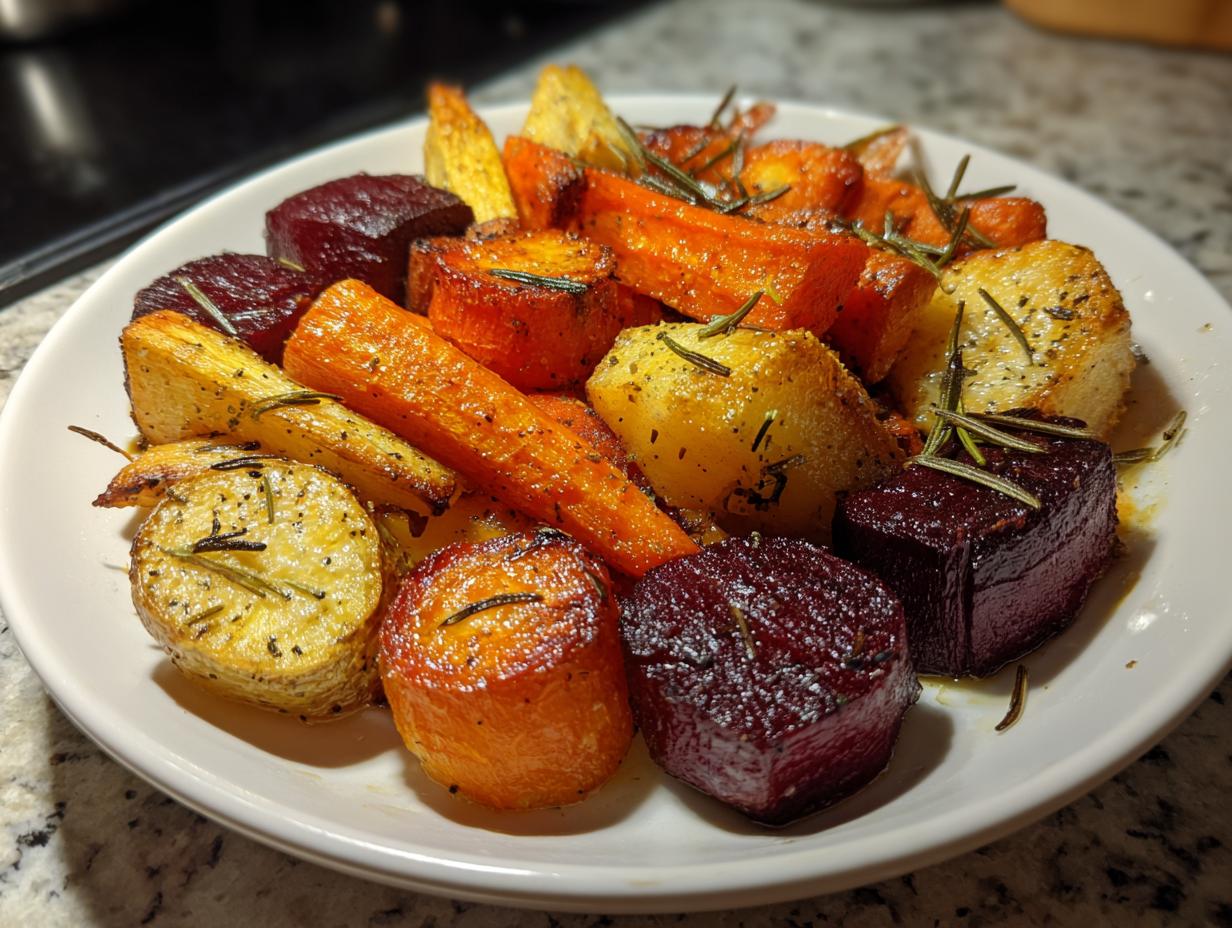
There’s something almost magical about roasted root vegetables—how a little olive oil, heat, and patience transform humble carrots, parsnips, and beets into caramelized, tender bites of comfort. I fell in love with this dish years ago during a chaotic week when my oven became my best friend. Tossed together in minutes, these veggies roast into a sweet, savory side that’s as healthy as it is delicious. Whether piled onto a weeknight dinner plate or served at holiday gatherings, they never disappoint. Simple, adaptable, and packed with flavor, this recipe is my go-to when I need something foolproof and nourishing.
Ingredients for Roasted Root Vegetables
Here’s the beautiful thing about roasted root vegetables—you probably have most of these ingredients already waiting in your kitchen! The exact measurements matter here to get that perfect balance of flavors and textures. Trust me, I’ve learned the hard way that eyeballing the oil or spices can lead to sad, soggy veggies or, worse, a bland bite. Here’s what you’ll need:
- 2 large carrots, peeled and chopped into 1-inch chunks (don’t skimp on peeling—it makes all the difference!)
- 2 large parsnips, peeled and chopped (same size as the carrots for even roasting)
- 1 large sweet potato, peeled and chopped (my secret is cutting these slightly smaller since they cook faster)
- 1 medium beetroot, peeled and chopped (wear an apron—those purple stains are stubborn!)
- 2 tbsp olive oil (the good stuff—it’s worth it)
- 1 tsp salt (I use kosher salt for better distribution)
- 1 tsp black pepper (freshly ground if you’ve got it)
- 1 tsp dried rosemary (crush it between your fingers to release more flavor)
That’s it! Seven simple ingredients that transform into something extraordinary. The prep is minimal, but I promise those few extra minutes peeling and chopping evenly pay off big time when everything comes out of the oven perfectly caramelized.
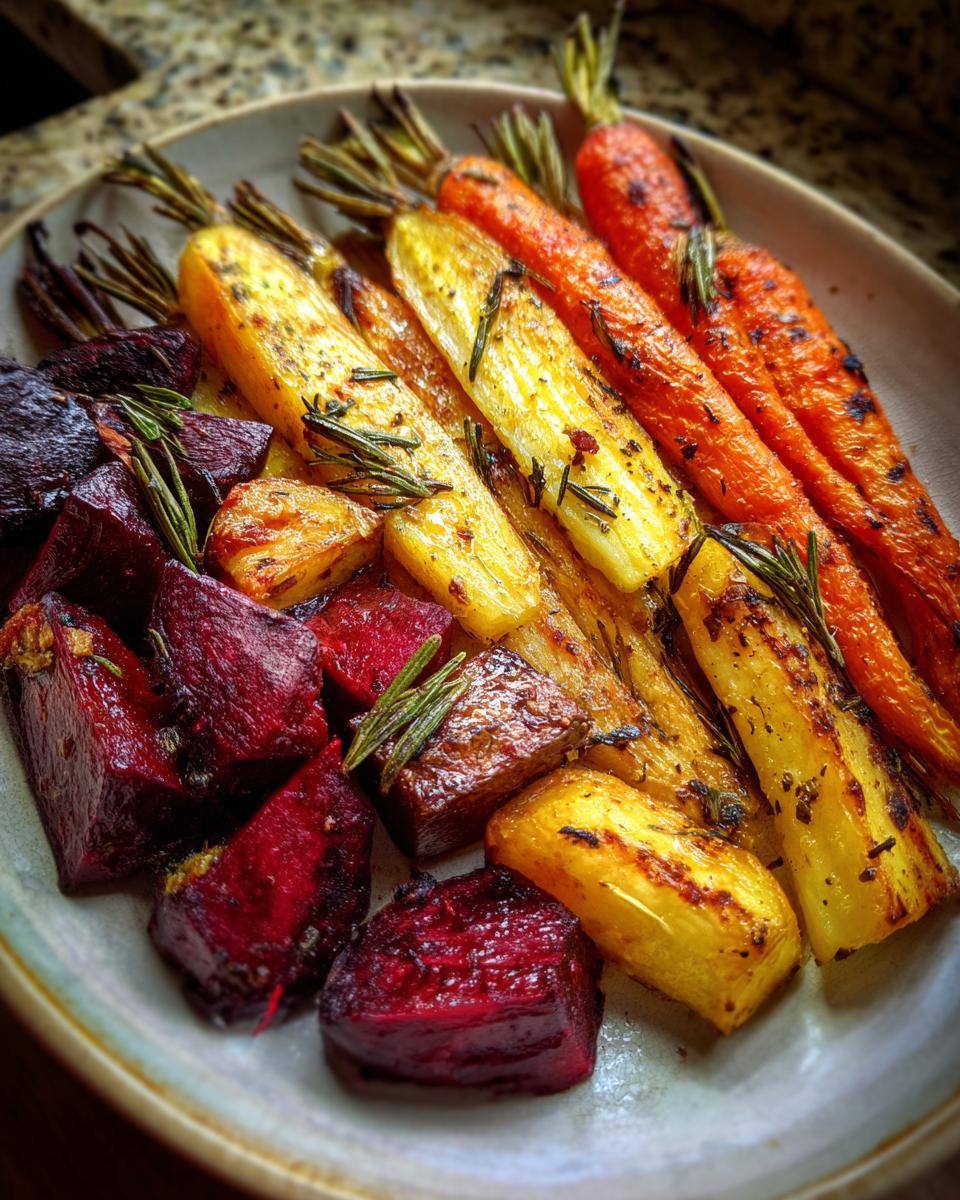
How to Make Roasted Root Vegetables
Okay, let’s get these beauties roasting! I’ve made this recipe so many times I could probably do it in my sleep, but I’ll walk you through each step carefully. The key is patience—don’t rush the roasting process. That caramelization is what makes these veggies sing!
Step 1: Prep the Vegetables
First things first—peel all those root vegetables! I know it’s tempting to skip this step (I’ve been there), but trust me, peeling gives you that perfect tender texture without any weird fibrous bits. Chop everything into roughly 1-inch chunks, but here’s my little secret: cut the sweet potato pieces slightly smaller (about ¾-inch) since they cook faster than the others. Uniform sizes mean everything roasts evenly—no half-burnt, half-raw surprises!
Step 2: Season and Toss
Now for the fun part—dump all your chopped veggies into a big bowl. Drizzle with that glorious olive oil (I like to use my hands to really coat every nook and cranny). Sprinkle the salt, pepper, and crushed rosemary over top. Here’s my pro tip: toss everything with your hands instead of a spoon—you’ll get way better coverage. The veggies should glisten but not swim in oil. If they look dry, add just another teaspoon or two—you can always add more, but you can’t take it back!
Step 3: Roast to Perfection
Preheat that oven to 200°C (400°F)—no cheating and putting them in cold! Spread the veggies in a single layer on a baking sheet (crowding leads to steaming, not roasting). Pop them in the oven and set your timer for 20 minutes. When it dings, give them a good stir—you’ll already smell that amazing rosemary scent! Roast another 15-20 minutes until they’re fork-tender with those gorgeous caramelized edges. The beets will bleed their color a bit—don’t panic, it makes everything look more vibrant! When they’re done, you’ll see some crispy bits and some soft, sweet centers—that’s the magic right there.
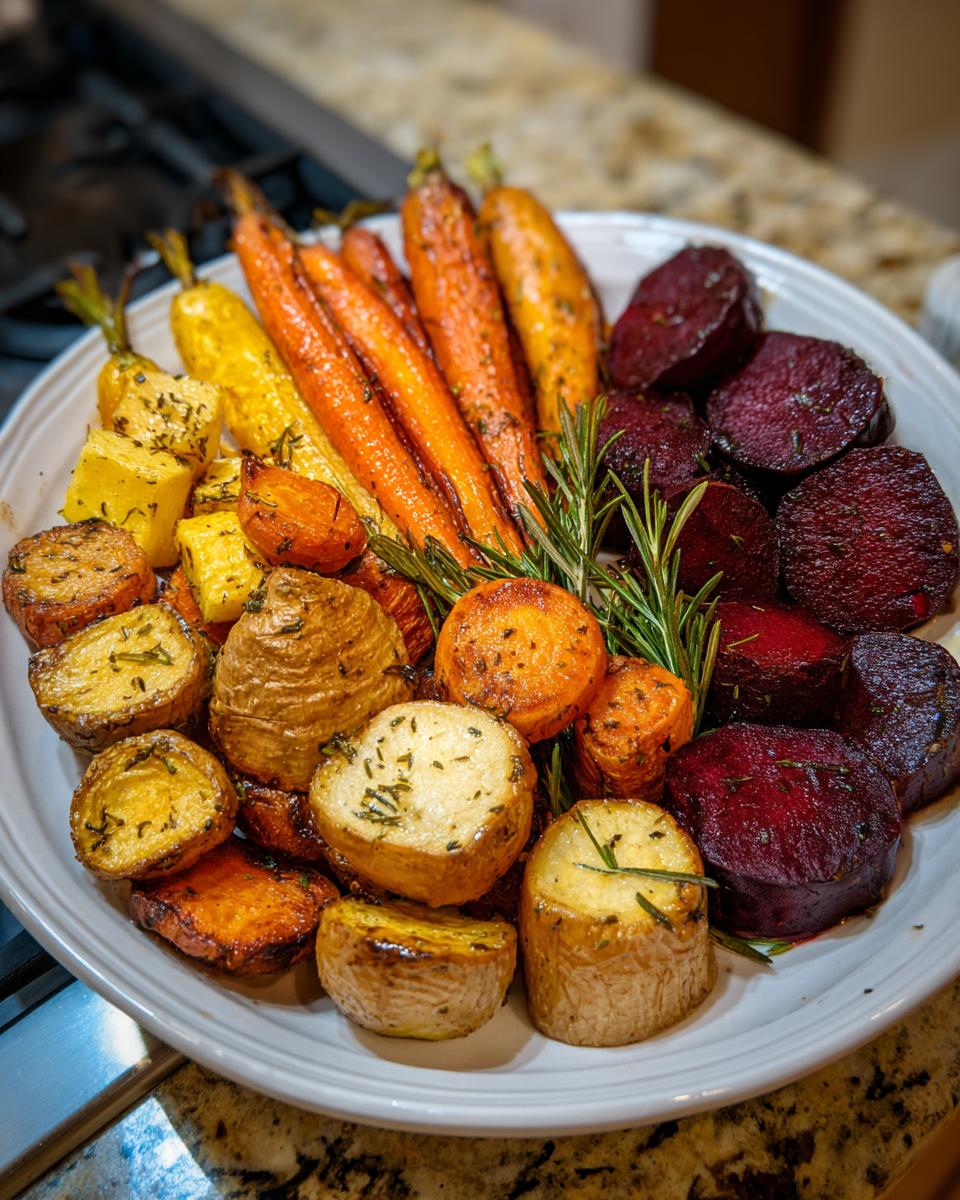
Why You’ll Love These Roasted Root Vegetables
Let me count the ways these roasted beauties will steal your heart! I’ve yet to meet someone who doesn’t fall for them after one bite. Here’s why they’ve become my kitchen MVP:
- Effortless elegance: Toss, roast, serve—that’s it! No fancy techniques, just pure, simple goodness that looks like you slaved for hours.
- Health in every bite: Packed with vitamins and fiber, this dish makes eating your veggies feel indulgent rather than obligatory.
- Adapts to your mood: Swap rosemary for thyme, throw in some garlic cloves, or add a drizzle of honey—it’s like a choose-your-own-adventure book for your taste buds.
- Meal prep magic: They reheat like a dream, making weekday lunches or quick dinner sides a no-brainer.
- Seasonal superstar: Works with whatever roots are in season—hearty winter parsnips, spring’s baby carrots, or autumn’s jewel-toned beets.
- Crowd-pleaser: Equally at home on a Tuesday dinner plate or a holiday buffet, these veggies make everyone feel fancy.
The first time I made this recipe, I couldn’t believe something so simple could taste so incredible. Now I double the batch every time—because between sneaky snackers and second helpings, they disappear faster than you’d think!
Tips for the Best Roasted Root Vegetables
After burning more pans of veggies than I care to admit (RIP that batch of charred carrots), I’ve learned a few tricks that’ll guarantee perfect roasted roots every time. These are the little things that make all the difference between “meh” and “more, please!”
Size matters—chop evenly!
Nothing’s worse than some veggies turning to mush while others stay crunchy. I use this rule of thumb: chop hard roots (like beets and carrots) into 1-inch pieces, but cut softer ones (sweet potatoes, turnips) about ¾-inch. Keep everything roughly the same shape too—cubes roast more evenly than random chunks.
Parchment paper is your friend
That sticky beet juice will have you scrubbing pans for days unless you line your sheet. Parchment paper not only saves cleanup time—it helps prevent burning on the bottom. Aluminum foil works in a pinch, but your veggies won’t get quite as crispy.
Give them space to breathe
Crowding is the enemy of caramelization! Use two pans if needed—when veggies steam instead of roast, you lose all those delicious crispy edges. If your sheet looks like a vegetable jigsaw puzzle, it’s time to divide and conquer.
Season like you mean it
Here’s where I went wrong for years: seasoning after roasting. Nope! Salt draws out moisture during cooking, which helps with browning. And don’t be shy with the oil—about 2 tablespoons per baking sheet is perfect. Too little and they’ll dry out; too much and they’ll get greasy.
The halfway flip is non-negotiable
Set that timer for 20 minutes and don’t skip the stirring! This ensures even browning on all sides. I use a metal spatula to scrape up any sticky bits—those caramelized pieces are flavor gold.
When in doubt, roast longer
Undercooked root vegetables taste like punishment. They’re done when a fork slides in easily and the edges are crispy. If they’re not quite there, give them another 5 minutes—the difference between “almost” and “perfect” is worth the wait!
Variations for Roasted Root Vegetables
One of my favorite things about this recipe is how easily you can mix it up depending on what’s in your fridge or what mood strikes you. Over the years, I’ve played around with countless combinations—some winners (hello, maple-glazed carrots!) and some… let’s call them learning experiences (note to self: fennel and beets don’t play nice together). Here are my tried-and-true variations that keep this dish exciting:
Herb Swaps
Rosemary’s great, but sometimes I crave different flavors. Try these easy herb switches:
- Thyme: More delicate than rosemary—perfect when you want subtle earthy notes
- Sage: Especially heavenly with sweet potatoes—just add 4-5 fresh leaves chopped fine
- Italian seasoning: When I’m feeling lazy, this pre-mixed blend works wonders
- Dried oregano + garlic powder: Gives a Mediterranean twist that pairs beautifully with chicken
Veggie Alternatives
No parsnips? No problem! The beauty of root vegetables is their interchangeability. Some of my favorite subs:
- Turnips: Peppery bite cuts through the sweetness—peel them well!
- Rutabaga: Heartier than turnips—needs extra roasting time
- Celery root: Sounds weird, tastes amazing—like a cross between potato and celery
- Purple potatoes: Stunning color contrast with golden carrots
- Shallots: Toss in whole peeled cloves—they caramelize into sweet little gems
Sweet & Savory Twists
When I want to impress guests or just treat myself, I’ll add one of these special touches:
- Maple drizzle: Toss veggies with 1 tbsp maple syrup before roasting—watch carefully as it burns easily!
- Balsamic glaze: Drizzle over hot veggies right out of the oven—the tang balances the sweetness
- Orange zest: Just 1 teaspoon grated over top brightens everything up
- Pecans or walnuts: Toast them separately and sprinkle on at the end for crunch
The possibilities are endless—that’s why this recipe never gets old in my kitchen. Last week I threw in some cubed butternut squash and it was a revelation! Just remember: whatever you add, keep the pieces roughly the same size so everything cooks evenly. Now go raid your root cellar (or grocery store) and make this dish your own!
Serving Suggestions for Roasted Root Vegetables
Now that you’ve got this gorgeous pan of caramelized veggies, let’s talk about how to show them off! I’ve served these roasted roots every which way—from quick weeknight dinners to fancy holiday spreads. Here are my absolute favorite pairings that’ll make your meal sing:
With Proteins
These veggies play so nicely with practically any protein you throw at them. My top picks:
- Roast Chicken: Classic combo—the sweet veggies balance the savory chicken perfectly. I like to roast them together—just add the veggies to the pan during the last 40 minutes of cooking.
- Pan-Seared Salmon: The rich fish and earthy roots are a match made in heaven. Top the salmon with lemon zest right before serving.
- Pork Tenderloin: That slight sweetness in the pork? Magic with roasted parsnips and carrots. Bonus points if you make an apple cider reduction to drizzle over both.
With Grains
Turn these into a hearty vegetarian main or satisfying side with some grains:
- Quinoa Pilaf: Toss warm quinoa with the roasted veggies and a handful of chopped parsley—lunchbox gold!
- Creamy Polenta: The ultimate comfort plate—scoop veggies over steaming polenta with a sprinkle of parmesan.
- Wild Rice Blend: The nutty flavors complement the sweet roots beautifully. Add some toasted pecans for crunch.
Special Occasion Pairings
When I want to impress (or just treat myself extra special):
- Herb-Crusted Rack of Lamb: The fancy dinner party star—those roasted beets make the plate pop with color.
- Beef Wellington: Sounds extravagant, but the sweet veggies cut through the rich pastry and beef perfectly.
- Stuffed Acorn Squash: Fill roasted squash halves with the veggies, some goat cheese, and a drizzle of honey.
Honestly? My favorite way is straight off the baking sheet with a big fork—no shame in veggie snacking! But when I want to make it a meal, one of these combinations never fails to satisfy. The beauty is how these simple roasted roots elevate everything they touch—from humble chicken thighs to special occasion feasts.
Storing and Reheating Roasted Root Vegetables
Okay, let’s talk leftovers—because let’s be real, I rarely finish an entire batch in one sitting (though I’ve certainly tried!). These roasted veggies keep beautifully if you store them right, and reheating them properly makes all the difference between “meh” and “just like fresh!” Here’s how I keep them tasting amazing for days:
The Best Way to Store Them
First rule: let them cool completely before storing—no one wants a soggy container of steamed veggies! I transfer mine to an airtight container (glass works best—plastic can absorb those earthy beet smells). Layer them with parchment paper if stacking to prevent sticking. They’ll keep in the fridge for about 3 days, though in my house they rarely last that long!
Reheating Like a Pro
The microwave is tempting, but trust me—your oven or toaster oven is the way to go. Spread the veggies on a baking sheet at 175°C (350°F) for about 10 minutes. This brings back their crispy edges instead of turning them to mush. If you’re in a rush, the air fryer works miracles—3-4 minutes at 190°C (375°F) and they’re practically fresh-from-the-oven good.
Creative Uses for Leftovers
When I’m feeling fancy (or just need to clean out the fridge), I turn leftovers into new meals:
- Veggie Hash: Sauté with eggs for breakfast—the sweetness pairs perfectly with runny yolks
- Grain Bowls: Toss with quinoa or farro, some greens, and a lemony dressing
- Soup Starter: Blend with veggie broth for a creamy roasted root soup (add a splash of cream if you’re feeling indulgent)
One important note: don’t freeze them! The texture turns disappointingly mushy when thawed. Learned that lesson the hard way after a “brilliant” meal prep session gone wrong. Stick to fridge storage, and you’ll keep enjoying those perfectly caramelized bites all week long!
Roasted Root Vegetables Nutritional Information
Let’s talk numbers—but don’t worry, these are the good kind! One of my favorite things about this dish is how nourishing it is while tasting downright indulgent. Of course, exact nutrition varies based on your specific ingredients and how much olive oil you use (I may or may not be guilty of an extra drizzle sometimes). But here’s the general breakdown per serving (about 1 cup):
- Calories: Around 150 – perfect for a satisfying side that won’t weigh you down
- Fat: 7g (mostly the heart-healthy kind from olive oil)
- Carbs: 20g – complex carbs that give you steady energy
- Fiber: 5g – nearly 20% of your daily needs in one delicious serving
- Sugar: 8g (all natural from the veggies themselves)
- Protein: 2g – pair with your favorite protein for a balanced meal
Beyond the numbers, you’re getting a powerhouse of vitamins—especially vitamin A from the carrots and sweet potatoes, plus antioxidants from the beets. The olive oil helps your body absorb all those fat-soluble nutrients too. I love that something so simple can pack such a nutritional punch! Carrots are particularly high in Vitamin A.
Remember: These are estimates based on my standard recipe. If you add maple syrup or swap in different veggies, your numbers will change slightly. But no matter how you tweak it, you’re still treating your body right with every colorful, flavorful bite.
Common Questions About Roasted Root Vegetables
I get asked about these roasted veggies all the time—friends texting me mid-recipe, neighbors popping over to ask why theirs didn’t turn out right. After years of trial and (plenty of) error, here are the questions that come up most often with my hard-earned answers!
Can I use frozen vegetables instead of fresh?
Oh honey, I wish! Sadly, frozen veggies just don’t roast well—they release too much water and end up steaming instead of caramelizing. Trust me, I’ve tried every “quick fix” in the book, and fresh is absolutely worth the extra peeling and chopping. That said, in a real pinch, thaw frozen veggies completely and pat them bone-dry with paper towels before roasting. They won’t be as crispy, but they’ll do in an emergency!
How do I prevent sogginess?
The soggy veggie struggle is real! Here’s what works for me every time: First, make sure your oven is fully preheated—I wait until mine beeps then give it 5 extra minutes. Second, don’t crowd the pan (use two if needed!). Most importantly? That 2 tablespoon oil measurement isn’t a suggestion—too little oil = steamed veggies, too much = greasy mess. And for heaven’s sake, don’t cover them with foil while roasting—that’s just asking for mush!
Why are some veggies done before others?
Welcome to my biggest early roasting frustration! The trick is cutting denser roots (beets, carrots) smaller than softer ones (sweet potatoes, turnips). My perfect combo: ¾-inch sweet potato cubes with 1-inch beet chunks. Also, position your pan in the middle rack—too high and the softer veggies burn before the hard ones cook through. If you notice uneven cooking, just remove the done pieces and let the others keep roasting. No shame in the veggie rescue game!
Can I prep these ahead of time?
Absolutely! Here’s my make-ahead secret: chop all veggies and store them in cold water in the fridge up to 24 hours ahead (this prevents browning). Drain and pat super dry before roasting. You can even toss them with oil and seasonings the night before—just keep them in a ziplock bag. The only no-no? Don’t roast them fully ahead—they lose that perfect texture when reheated from fully cooked. Partial roasting works though—do 20 minutes, cool, then finish roasting for 15 when ready to serve.
My beets stained everything pink—help!
Oh sweet summer child, welcome to the beet-stained club! First defense: wear an apron and use a dark-colored cutting board. For cleanup, rub salt on stained hands before washing—works like magic! As for your baking sheet? Soak it immediately with baking soda and vinegar. Pro tip: roast beets in a separate corner of the pan if you’re serving to company and want pretty presentation. But honestly? I’ve grown to love that vibrant pink hue—it’s like nature’s food coloring! For more on vegetable nutrition, check out this sweet potato casserole recipe for inspiration on other root vegetable uses.
Print
Perfect Roasted Root Vegetables in Just 40 Minutes
- Total Time: 55 mins
- Yield: 4 servings 1x
- Diet: Vegetarian
Description
A simple and healthy dish featuring roasted root vegetables.
Ingredients
- 2 large carrots, peeled and chopped
- 2 large parsnips, peeled and chopped
- 1 large sweet potato, peeled and chopped
- 1 medium beetroot, peeled and chopped
- 2 tbsp olive oil
- 1 tsp salt
- 1 tsp black pepper
- 1 tsp dried rosemary
Instructions
- Preheat your oven to 200°C (400°F).
- Toss all chopped vegetables with olive oil, salt, pepper, and rosemary.
- Spread evenly on a baking tray.
- Roast for 30-40 minutes, stirring halfway, until tender and golden.
- Serve warm.
Notes
- Cut vegetables into even sizes for uniform cooking.
- Adjust seasoning to taste.
- Store leftovers in an airtight container for up to 3 days.
- Prep Time: 15 mins
- Cook Time: 40 mins
- Category: Side Dish
- Method: Roasting
- Cuisine: International
Nutrition
- Serving Size: 1 cup
- Calories: 150
- Sugar: 8g
- Sodium: 400mg
- Fat: 7g
- Saturated Fat: 1g
- Unsaturated Fat: 5g
- Trans Fat: 0g
- Carbohydrates: 20g
- Fiber: 5g
- Protein: 2g
- Cholesterol: 0mg