
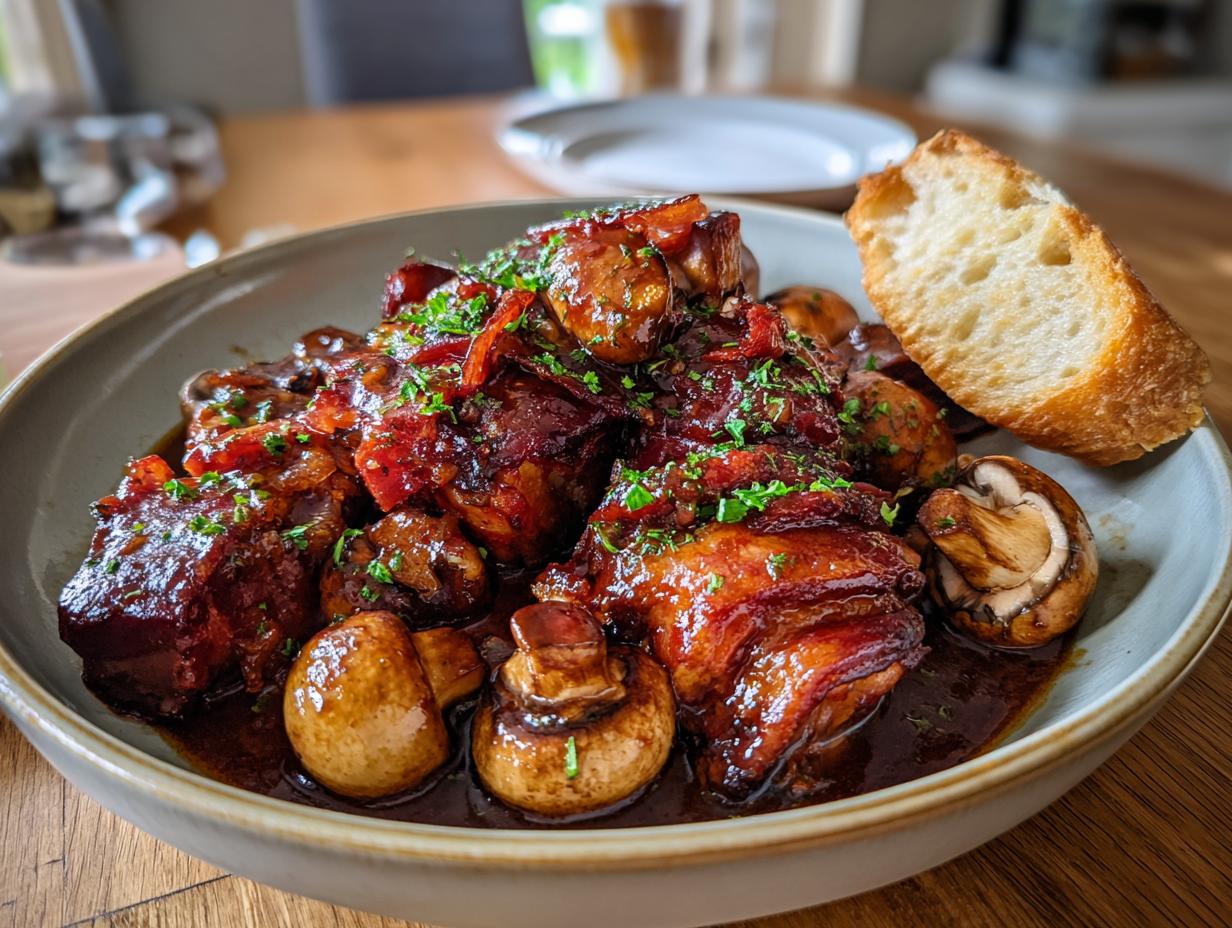
There’s something magical about French comfort food, isn’t there? The way a single bite can transport you to a cozy bistro in Paris or a rustic countryside kitchen. Coq au Vin does that for me every time. I still remember my first taste at a tiny café in Lyon – the rich, wine-infused sauce clinging to fall-off-the-bone chicken, the earthy mushrooms, that hint of smokiness from the bacon. It felt like a hug in a bowl.
What surprised me most? This dish that sounds so fancy is actually incredibly approachable to make at home. Don’t let the French name intimidate you – it’s really just chicken braised in wine with some pantry staples. The magic happens in one pot with ingredients you probably already have. My version keeps all the rustic charm of the classic but simplifies a few steps because, let’s be honest, we’re not all professional chefs!
Fun fact: This dish was originally peasant food, meant to tenderize tough rooster meat (that’s what “coq” means!). Today we use regular chicken, but the slow-cooking method remains the same – and oh, what a difference it makes. The wine works its magic, the flavors deepen, and suddenly your kitchen smells like a French grandmother’s been cooking there all day.
Why You’ll Love This Coq au Vin
Trust me, once you try this version, it’ll become your go-to cozy dinner. Here’s why:
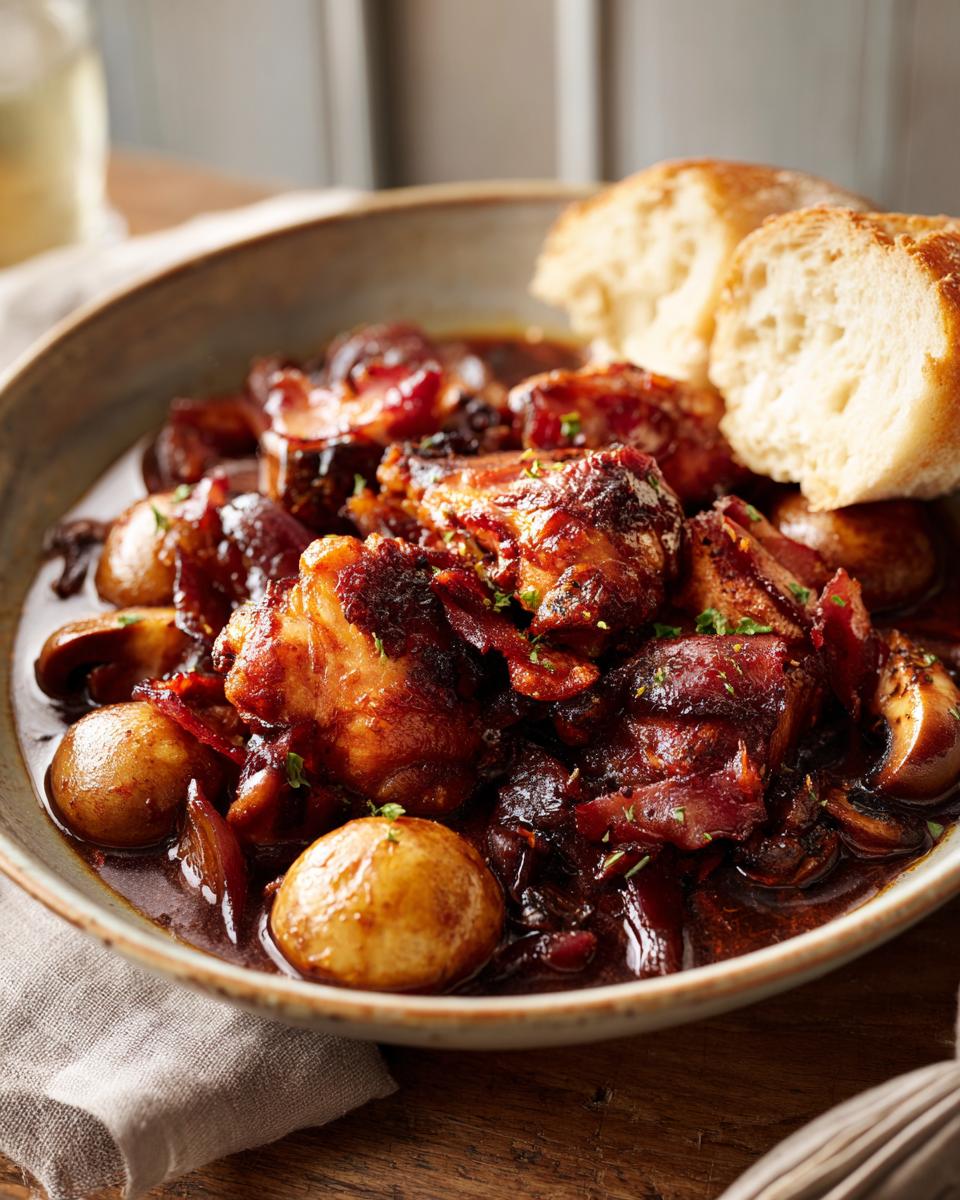
- Unbelievably tender chicken that falls right off the bone—thanks to that slow braise in rich red wine
- A sauce so deeply flavorful you’ll want to lick the bowl (I won’t judge!)—earthy mushrooms, smoky bacon, and wine reduce into pure magic
- Elegant enough for guests, but simple enough for weeknights—just one pot and basic ingredients
- That French bistro vibe at home—light some candles, pour the same wine you cooked with, and voilà!
Honestly? It’s the kind of dish that makes you feel like a rockstar cook with minimal effort. The leftovers (if you have any!) taste even better the next day.
Ingredients for Authentic Coq au Vin
Let me tell you a secret – the magic of coq au vin starts with getting the right ingredients. I learned this the hard way after a disastrous attempt using cheap cooking wine (never again!). Here’s exactly what you’ll need, broken down so you can shop like a pro:
The Protein Powerhouse
- 1 whole chicken (about 1.5kg), cut into 8 pieces – thighs, drumsticks, and breasts with skin-on for maximum flavor
- 200g thick-cut bacon, diced – go for smoky rather than sweet, and please don’t skip this!
The Flavor Builders
- 2 medium onions, finely chopped – yellow onions work best here
- 200g button mushrooms, sliced – or cremini if you’re feeling fancy
- 2 garlic cloves, minced – fresh only, none of that jarred stuff
The Liquid Gold
- 2 cups dry red wine – Burgundy or Pinot Noir are my go-tos (use something you’d actually drink!)
- 1 cup good-quality chicken stock – homemade if you have it, or low-sodium store-bought
The Magic Touches
- 2 tbsp tomato paste – that little tube in your fridge is perfect
- 2 tbsp all-purpose flour – for thickening that gorgeous sauce
- 2 tbsp unsalted butter – because everything’s better with butter
- 1 tsp fresh thyme leaves – or ½ tsp dried if that’s what you’ve got
- 1 bay leaf – the unsung hero of French cooking
- Salt and freshly ground black pepper – to taste, but be generous!
A quick tip from my kitchen disasters: Measure everything before you start cooking (we fancy cooks call this “mise en place”). When things start moving fast, you’ll be glad you did!
Essential Equipment for Coq au Vin
Here’s the truth – you don’t need fancy gadgets to make amazing coq au vin, but a few key tools make all the difference. After burning my fair share of chicken in the wrong pot (ouch!), I’ve learned exactly what works best. These are my kitchen MVPs for this recipe:
- 5-6 quart Dutch oven – That heavy enameled cast iron pot isn’t just pretty, it distributes heat evenly so nothing burns. Mine’s permanently stained from all the coq au vin I’ve made, and I wouldn’t have it any other way!
- Sharp chef’s knife – For chopping onions without crying (as much) and slicing mushrooms evenly. A dull knife is dangerous, friends – trust me, I’ve got the band-aids to prove it.
- Kitchen tongs – These are your best friends for flipping chicken pieces without tearing the skin. The long ones keep your hands safely away from splattering bacon fat (learned that lesson the hard way).
- Wooden spoon – Perfect for scraping up all those delicious browned bits from the pot when you deglaze with wine. Metal can scratch your beautiful Dutch oven.
- Liquid measuring cup – Eyeballing wine measurements leads to sad, unbalanced sauces. Ask me how I know! A proper 2-cup glass measure saves the day.
Pro tip: If you don’t have a Dutch oven, a heavy-bottomed stainless steel pot with tight-fitting lid works in a pinch. Just keep the heat medium-low to prevent sticking. And whatever you do, don’t use nonstick – you won’t get those glorious fond bits that make the sauce so incredible!
How to Make Coq au Vin Step by Step
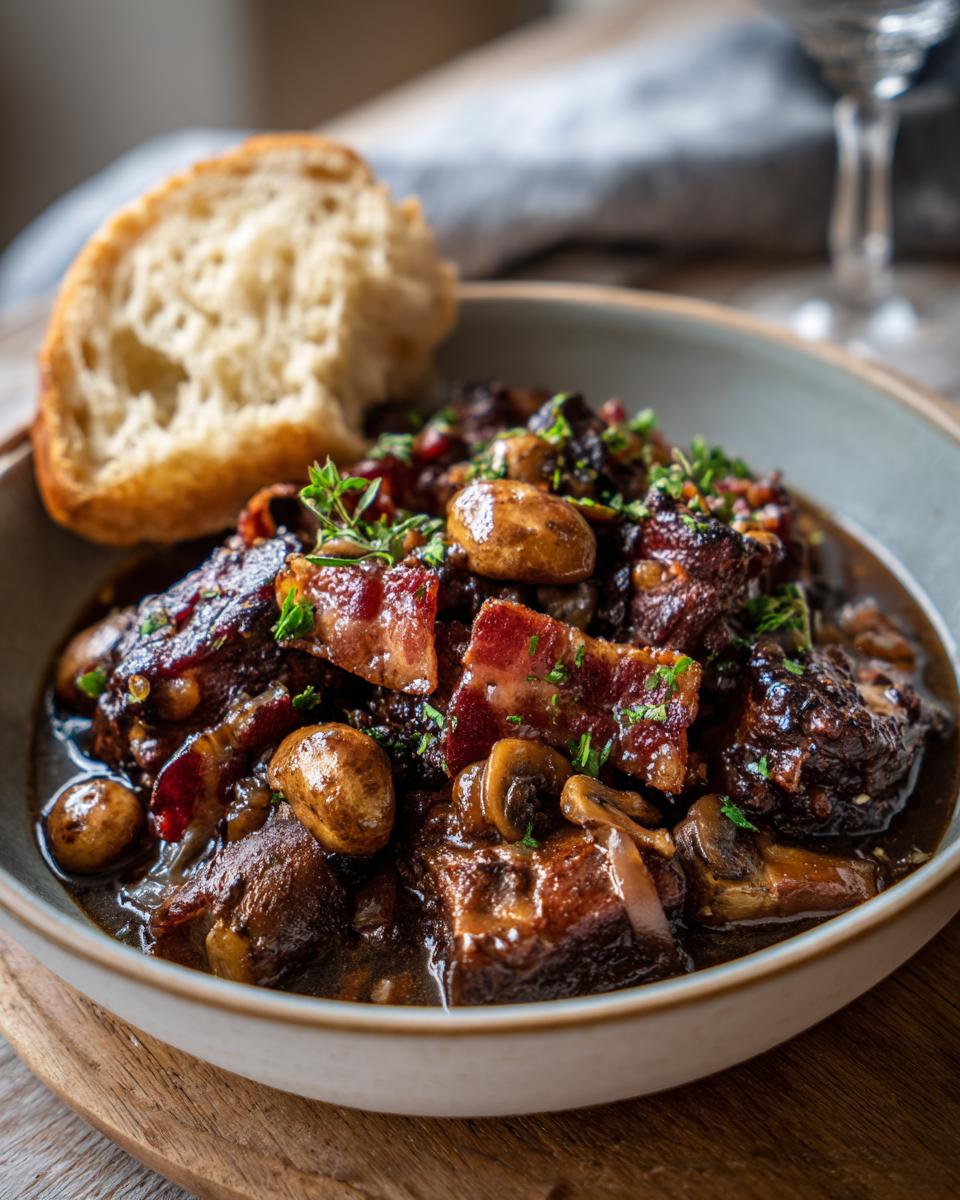
Okay, let’s get cooking! This is where the magic happens. I’ll walk you through each step just like my French friend Marie showed me – with plenty of “oh là là”s and wrist flicks. Don’t worry if it seems like a lot at first glance. Once you start, you’ll see how everything flows together beautifully in one pot. Just take it step by step, and soon your kitchen will smell like a Parisian bistro!
Browning the Chicken and Bacon
First things first – we’re building flavor from the ground up. Heat your Dutch oven over medium-high heat (no oil needed yet!). Toss in your diced bacon and let it sizzle until crispy, about 5 minutes. Use those tongs to stir occasionally – bacon likes attention! Once it’s golden and crisp, scoop it out with a slotted spoon and set aside. Leave all that glorious fat in the pot – that’s liquid gold for our chicken.
Now, pat your chicken pieces dry with paper towels (this is crucial for getting that perfect golden crust!). Season generously with salt and pepper on both sides. Working in batches (don’t crowd the pan!), brown the chicken skin-side down first until golden, about 5 minutes per side. The sizzle should make you smile! Transfer each piece to a plate as it finishes. And whatever you do, resist the urge to move them around – let them develop that beautiful crust.
Building the Flavor Base
Here’s where things get really aromatic. Lower the heat to medium and add your chopped onions to the pot. Stir them around in that chicken-bacon fat until they start to soften, about 3 minutes. Now add the garlic – just 30 seconds until fragrant (burned garlic is the enemy!). Toss in your sliced mushrooms and cook until they release their juices and start to brown, about 5 minutes.
Time for the secret weapon: sprinkle the flour over everything and stir well to coat. This is what’ll thicken our sauce later. Cook for about 1 minute to get rid of that raw flour taste. Now pour in the wine – ahhh, that sound as it hits the hot pan! Use your wooden spoon to scrape up all those delicious browned bits from the bottom. This is called deglazing, and it’s where so much flavor lives!
Simmering to Perfection
Now the fun part! Add back the chicken (with any juices), crispy bacon, chicken stock, tomato paste, thyme, and that precious bay leaf. Give everything a gentle stir to combine. The liquid should come about halfway up the chicken pieces – if it looks too dry, add a splash more stock or wine.
Bring it to a simmer, then reduce the heat to low and cover. Now walk away for 45 minutes (set a timer!). This slow braise is what transforms tough chicken into melt-in-your-mouth perfection. Resist peeking more than once or twice – we want all that steam to stay in the pot! When the timer goes off, check that the chicken is tender (it should pull apart easily with a fork) and the sauce has thickened slightly. Fish out and discard the bay leaf – its job is done!
Final touch: swirl in those 2 tablespoons of butter off the heat. This gives the sauce that gorgeous silky finish. Taste and adjust seasoning – it might need another pinch of salt. And voilà! You’ve just made authentic coq au vin. Now try not to eat it straight from the pot while it’s piping hot (I never succeed at this).
Expert Tips for the Best Coq au Vin
Listen closely, because these are the little tricks I’ve picked up from years of making (and occasionally messing up!) coq au vin. They’re the difference between a good dish and a “wow, did you really make this?!” moment:
Marinate for maximum flavor
If you’ve got time, let the chicken bathe overnight in half the wine with some thyme and garlic. It’s like a spa day for poultry! The wine works its magic deep into the meat, making every bite richer. No time? Even a 30-minute soak helps. Just pat the chicken dry before browning or you’ll get more steam than sear.
Your wine matters – a lot
That old saying “don’t cook with wine you wouldn’t drink”? Gospel truth here. Skip the “cooking wine” aisle—it’s loaded with salt. A decent $10-15 bottle of Burgundy or Pinot Noir makes all the difference. Pro tip: Buy two bottles—one for cooking, one for sipping while you cook!
Skim the fat like a Parisian chef
After browning, you’ll see golden fat floating on top. Some is good for flavor, but too much makes the sauce greasy. Here’s my trick: let the dish rest for 5 minutes after cooking, then gently tilt the pot and spoon off the excess. Your waistline (and dinner guests) will thank you.
Don’t rush the brown
When searing chicken, wait until it releases easily from the pan before flipping—about 5 minutes per side. Those crispy brown bits? That’s flavor gold! If it sticks, it’s not ready. And always work in batches—overcrowding steams the chicken instead of browning it.
The butter finish is non-negotiable
That final swirl of cold butter off the heat isn’t just for show—it gives the sauce that velvety French restaurant texture. And for heaven’s sake, use real butter. Margarine in coq au vin should be illegal!
Remember: Great coq au vin isn’t about fancy techniques—it’s about patience and quality ingredients. Follow these tips, and you’ll have a dish that tastes like it simmered all day in a Provençal farmhouse. Even if you actually made it between Zoom meetings!
Serving Suggestions for Coq au Vin
Oh, the joy of serving coq au vin! This is where you get to play French bistro host. After all that simmering, you’ll want sides that do justice to that glorious sauce. Here’s how I love to plate it up:
The Perfect Starch Partners
- Crusty baguette – Essential for sopping up every last drop of that wine sauce. I like to warm mine slightly so the crust crackles when you tear it.
- Creamy mashed potatoes – My absolute favorite! The fluffy potatoes act like edible spoons for the rich sauce. Add extra butter and a splash of warm milk for silky perfection.
- Buttered egg noodles – A simpler option that lets the coq au vin shine. Toss them with parsley for freshness.
Fresh Contrasts
- Simple green salad – Just bitter greens (like frisée or arugula) with a sharp vinaigrette cuts through the richness beautifully.
- Buttered green beans – Blanched until crisp-tender, then tossed with lemon zest and almonds.
- Roasted carrots – A fun nod to the dish’s origins, glazed with a bit of honey.
The Wine Pairing
Here’s my rule: Drink what you cooked with! That bottle of Burgundy or Pinot Noir you used in the dish will complement it perfectly. If you want something different, try a Beaujolais – its bright fruit balances the earthy flavors.
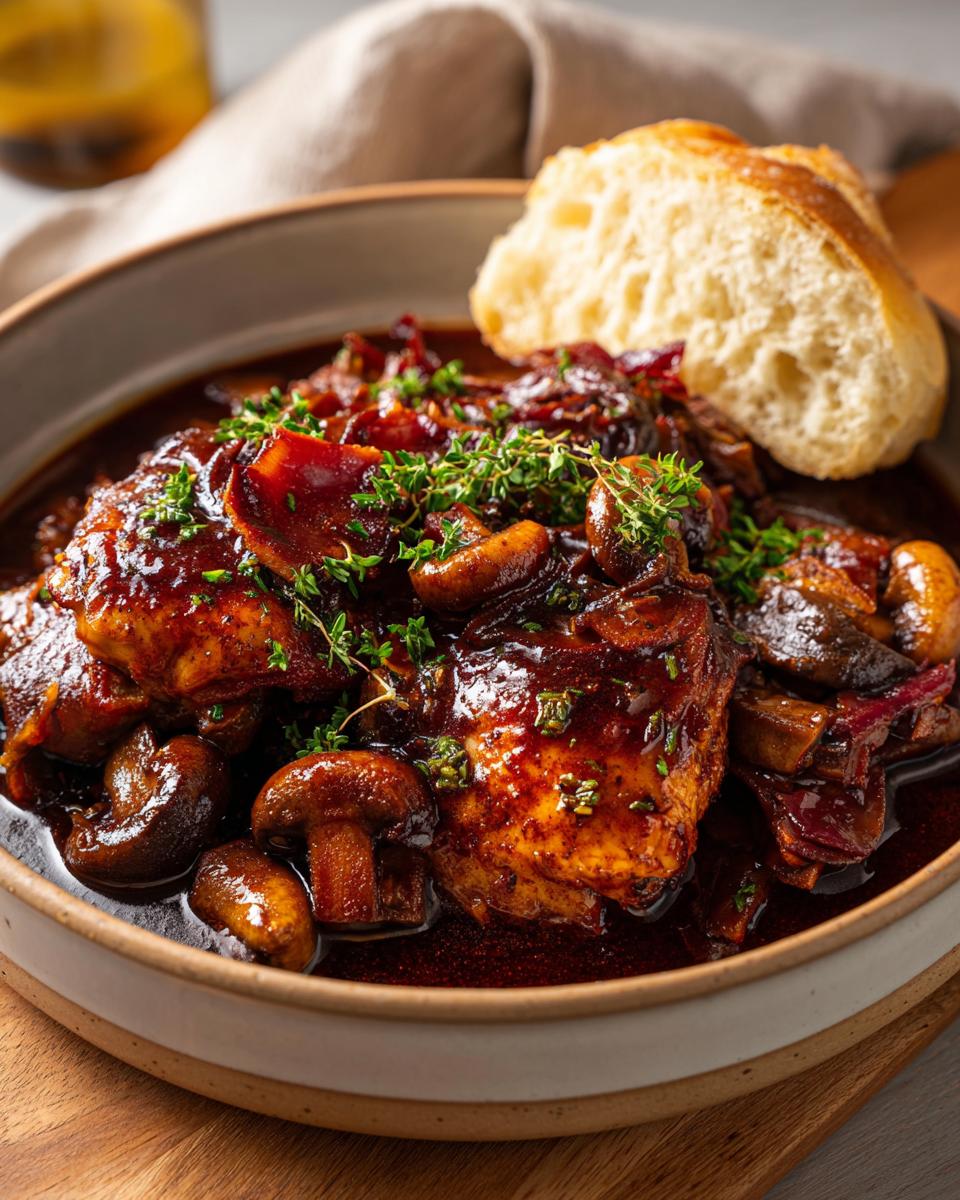
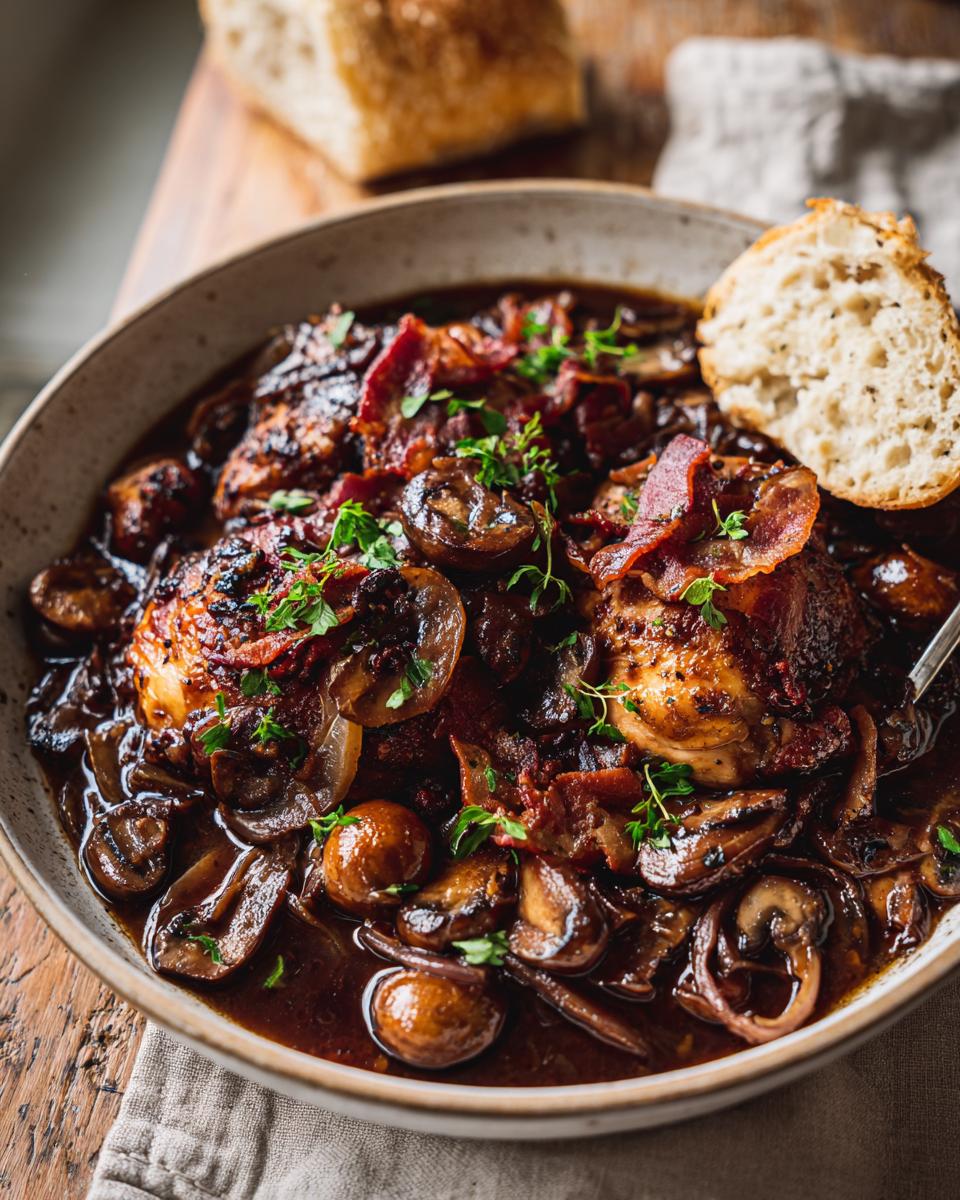
Presentation tip: Serve family-style for that rustic French feel. Pile the chicken in your prettiest serving dish (no need to be fancy – my chipped ceramic one works great!), pour the sauce over top, and scatter with fresh thyme sprigs. Light candles, put on some French jazz, and suddenly your Tuesday dinner feels très chic!
Storing and Reheating Coq au Vin
Here’s the best part about coq au vin—it gets even better with time! Those flavors meld and deepen, making leftovers something to look forward to. But you’ve got to store and reheat it right to keep that magic intact. Here’s how I do it:
Refrigerating Like a Pro
Let the dish cool completely (about 30 minutes) before transferring it to an airtight container. Don’t leave it out too long—bacteria love room temperature! It’ll keep beautifully in the fridge for up to 3 days. Pro tip: Store the chicken and sauce together—separating them dries out the meat.
Freezing for Future Feasts
Yes, you can freeze coq au vin! It’s perfect for meal prep or those nights when you need comfort food fast. Portion it into freezer-safe containers or heavy-duty zip-top bags (I like to label them with the date). It’ll stay good for up to 1 month. Thaw overnight in the fridge when you’re ready to enjoy it again.
Reheating Without Losing Flavor
Here’s my golden rule: always reheat on the stovetop, not the microwave. Pour the coq au vin into a saucepan and add a splash of wine or chicken broth to loosen the sauce. Heat gently over medium-low, stirring occasionally, until it’s warmed through—about 10 minutes. This keeps the chicken tender and the sauce silky. If it looks too thick, add more liquid a tablespoon at a time until it’s just right.
Quick safety note: Make sure it reaches 165°F (74°C) when reheating—use a food thermometer if you’re unsure. And never reheat more than once! Now go enjoy your delicious leftovers with a fresh baguette and a glass of wine. Bon appétit!
Coq au Vin FAQs
I get asked these questions all the time, so let me save you the trial-and-error with answers straight from my (many) coq au vin adventures!
Can I use white wine instead of red?
Oh honey, no. I made this mistake once and it just wasn’t the same. Red wine gives coq au vin that deep, rich flavor and gorgeous color. White wine works in a pinch, but you’ll miss out on that signature depth. If you must substitute, try beef broth with a tablespoon of red wine vinegar to mimic the acidity.
Can I make coq au vin ahead of time?
Absolutely! In fact, it tastes even better the next day. The flavors have more time to get cozy together. Just cool it completely before refrigerating, then gently reheat on the stove with a splash of wine or broth. It’s my go-to dinner party trick!
What can I use instead of bacon?
Pancetta is a great swap if you’re out of bacon – it’s got that same salty, porky goodness. Vegetarian? Try smoked mushrooms or a tablespoon of smoked paprika for that umami kick. But honestly? The bacon is worth it for that authentic flavor.
My sauce is too thin – help!
No worries! Remove the chicken and simmer the sauce uncovered for 5-10 minutes to reduce. Or make a quick beurre manié (equal parts soft butter and flour mashed together) and whisk in small amounts until thickened.
Can I use boneless chicken?
You can, but bone-in pieces stay juicier during the long braise. If you must go boneless, reduce cooking time to 25-30 minutes to prevent drying out. Thighs work better than breasts here!
Nutritional Information
Let’s be real – we’re not eating coq au vin because it’s a light salad! This is rich, comforting French food at its finest. But if you’re curious about what’s in each delicious bite, here’s the general breakdown (remember, these are estimates – your exact numbers will vary based on ingredients and brands):
- Protein-packed – All that chicken gives you a solid protein boost (about 35g per serving) to keep you satisfied.
- Moderate carbs – Mostly from the wine reduction and veggies, coming in around 15g per serving.
- Rich in flavor, not crazy in calories – A typical portion runs about 450 calories – not bad for such a luxurious dish!
- Watch the sodium – Between the bacon and stock, it can get up there (around 800mg). Use low-sodium stock if you’re watching intake.
Pro tip: The wine alcohol cooks off during simmering, leaving just the flavor – so no need to worry about that! And remember, this is soul food meant to be enjoyed in moderation as part of a balanced diet. Pair it with a green salad if you want to lighten things up. Now pass the crusty bread and enjoy!
Share Your Coq au Vin Experience
Nothing makes me happier than hearing about your coq au vin adventures! Did yours turn out silky and perfect? Maybe you added your own twist with extra garlic or a splash of brandy? Drop a comment below and tell me all about it – the triumphs, the disasters (we’ve all had them!), and everything in between.
I especially love hearing first-time stories! Remember my debut attempt when I used a sweet wine by accident? (Let’s just say it tasted more like dessert than dinner.) Your experiences help other home cooks too, so don’t be shy. Snap a photo of your masterpiece and tag me on Instagram – I might just feature your creation!
And hey, if you loved this recipe, please give it a star rating. It helps others find this cozy French classic. Now grab a glass of that leftover wine, pat yourself on the back, and bask in that “I just made coq au vin!” glow. You’ve earned it, chef!
Print
1 Pot Coq au Vin Recipe – Irresistible French Comfort Food
- Total Time: 1 hour 20 minutes
- Yield: 4 servings 1x
- Diet: Low Lactose
Description
A classic French dish where chicken is braised with wine, mushrooms, onions, and bacon.
Ingredients
- 1 whole chicken, cut into pieces
- 200g bacon, diced
- 200g button mushrooms, sliced
- 2 onions, finely chopped
- 2 cloves garlic, minced
- 2 cups red wine
- 1 cup chicken stock
- 2 tbsp tomato paste
- 2 tbsp flour
- 2 tbsp butter
- 1 tsp thyme
- 1 bay leaf
- Salt and pepper to taste
Instructions
- Season the chicken pieces with salt and pepper.
- In a large pot, cook the bacon until crispy. Remove and set aside.
- Brown the chicken in the bacon fat. Remove and set aside.
- Sauté onions and garlic until soft. Add mushrooms and cook for 5 minutes.
- Sprinkle flour over the vegetables and stir.
- Pour in wine and chicken stock, then add tomato paste, thyme, and bay leaf.
- Return chicken and bacon to the pot. Simmer for 45 minutes.
- Remove bay leaf before serving.
Notes
- Use a dry red wine like Burgundy or Pinot Noir.
- Marinate the chicken in wine overnight for deeper flavor.
- Serve with mashed potatoes or crusty bread.
- Prep Time: 20 minutes
- Cook Time: 1 hour
- Category: Main Course
- Method: Braising
- Cuisine: French
Nutrition
- Serving Size: 1 plate
- Calories: 450
- Sugar: 5g
- Sodium: 800mg
- Fat: 20g
- Saturated Fat: 7g
- Unsaturated Fat: 10g
- Trans Fat: 0g
- Carbohydrates: 15g
- Fiber: 2g
- Protein: 35g
- Cholesterol: 110mg