
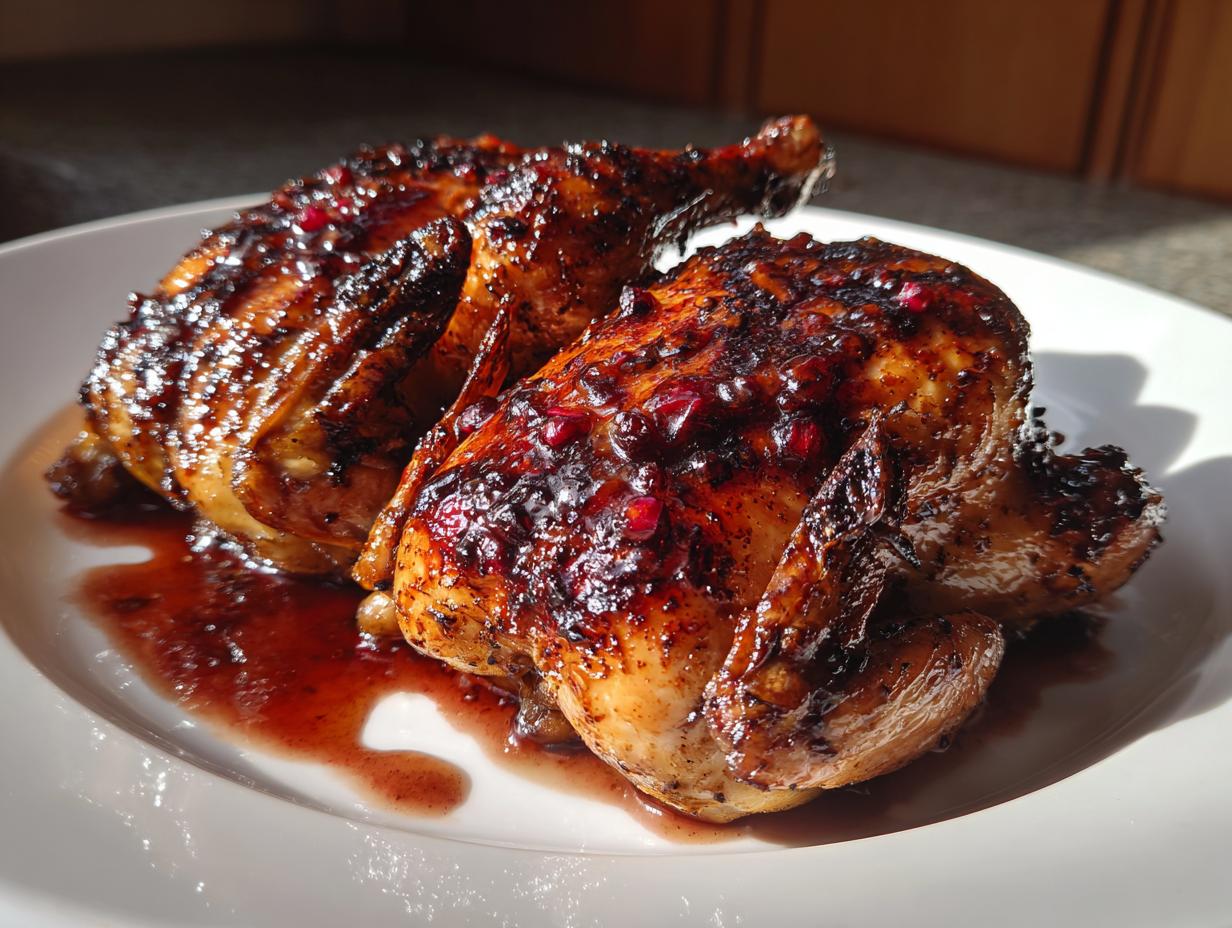
Oh, let me tell you about these Cornish game hens with pomegranate glaze—they’re my go-to when I want something fancy without the fuss! That sweet-tangy glaze clinging to crispy skin? Absolute magic. I first made this for a dinner party years ago, and now my friends demand it every holiday season. What I love most (besides how gorgeous they look on the plate) is how simple it really is—just a handful of ingredients and about an hour in the oven. Trust me, that pomegranate-honey combo transforms these little hens into something truly special.
Why You’ll Love This Cornish Game Hens with Pomegranate Glaze
Listen, this recipe is one of those rare gems that looks fancy but couldn’t be easier—here’s why it’s a keeper:
- Quick prep: Rub, roast, glaze—done. No fussy techniques, just simple steps that deliver big flavor.
- Showstopper looks: That glossy pomegranate glaze makes these hens look straight out of a gourmet magazine (your guests will never guess how easy it was).
- Perfect flavor balance: Sweet honey and tangy pomegranate play off the savory herbs so well—every bite keeps you coming back.
- Special occasion magic: I’ve served this for anniversaries, holiday dinners, even fancy date nights at home—it always feels celebratory.
Seriously, once you try this combo, you’ll understand why it’s my secret weapon!
Ingredients for Cornish Game Hens with Pomegranate Glaze
Gather these simple ingredients—that’s all you need to make something truly spectacular. I’ve included my little notes next to each one because, let’s be honest, details make all the difference here!
- 2 Cornish game hens (about 1.5 lbs each): Look for plump ones with smooth skin. Let them sit at room temperature for 20 minutes before cooking—it helps them roast evenly.
- 1/2 cup pomegranate juice: Freshly squeezed is best if you can find ripe pomegranates (the color is unreal!), but a good bottled juice works too—just check for no added sugars.
- 2 tbsp honey: I love wildflower honey here for its floral notes, but any real honey will do. Warm your measuring spoon first—it’ll slide right off!
- 1 tbsp olive oil: Just enough to help the seasoning stick and get that gorgeous golden skin.
- 1 tsp salt: Kosher salt is my go-to—it sticks better than table salt.
- 1/2 tsp black pepper: Freshly cracked adds a nice little punch.
- 1 tsp dried thyme: Rub it between your fingers before adding to wake up the oils. So fragrant!
- 1 tsp garlic powder: Trust me, powder works better than fresh here—no burnt garlic bits.
Ingredient Substitutions
Out of something? No stress—here’s how to pivot without losing that magic:
- Pomegranate juice substitute: Cranberry juice gives a similar tartness, or use 1/4 cup balsamic vinegar mixed with 1/4 cup water for depth.
- Honey alternative: Maple syrup works beautifully—just reduce it a bit longer since it’s thinner.
- Thyme swap: Dried rosemary or herbes de Provence both bring their own lovely flavors.
- No game hens? Use chicken thighs (bone-in, skin-on) and reduce cooking time by 10 minutes.
See? No need to panic—this recipe’s as flexible as it is delicious!
How to Make Cornish Game Hens with Pomegranate Glaze
Okay, let’s get these gorgeous birds in the oven! I’ve broken it down into foolproof steps—follow these, and you’ll have restaurant-worthy hens every time. The key? Patience with the glaze (no rushing!) and letting those little guys rest before serving. You’ve got this!
Step 1: Prep and Season the Hens
First, preheat your oven to 375°F (190°C). While it heats up, grab those hens out of the fridge—this is crucial! Pat them completely dry with paper towels. I mean, really get in there—moisture is the enemy of crispy skin. Drizzle them with olive oil, then rub it all over like you’re giving them a little massage. Now sprinkle generously with the salt, pepper, thyme, and garlic powder. You want every inch seasoned—don’t forget the cavity! Pro tip: Lift the wings and tuck them behind the shoulders (chefs call this “trussing,” but we’re keeping it simple). This keeps them from burning.

Step 2: Roast and Glaze
Pop those hens on a roasting pan (I line mine with foil for easy cleanup) and roast for 45 minutes. Now, the glaze! In a small saucepan, simmer the pomegranate juice and honey over medium-low heat. Stir occasionally—you’ll know it’s ready when it coats the back of a spoon like thin syrup (about 10 minutes). Here’s the fun part: After the initial roast, brush that glossy glaze all over the hens. Get every nook and cranny! Roast for another 15 minutes until the skin is sticky-crisp and a meat thermometer reads 165°F (74°C) in the thickest part of the thigh. Oh, and that glaze? If it thickens too much while you wait, just warm it gently with a splash of water.

Step 3: Rest and Serve
Here’s where most people mess up—they skip the resting! Transfer the hens to a cutting board and let them sit for 5 minutes. This lets the juices redistribute (translation: no dry meat!). While they rest, I like to sprinkle fresh pomegranate seeds over the top—those little ruby jewels make it look so festive. Carve right down the breastbone with kitchen shears or a sharp knife, and serve with extra glaze drizzled over. Watch everyone’s eyes light up when they cut into that juicy, glazed perfection!

Tips for Perfect Cornish Game Hens with Pomegranate Glaze
After making this recipe dozens of times (and yes, learning from my mistakes!), I’ve got some foolproof tricks to guarantee your hens turn out spectacular every time. These little nuggets of wisdom? They’re game-changers!
Oven temperature matters—trust me
Here’s something I learned the hard way: Not all ovens are honest! Mine runs hot by about 25 degrees, so I keep an inexpensive oven thermometer hanging inside. That first time I didn’t check? Burnt glaze and dry hens—total heartbreak. Take two minutes to verify your temp before roasting. You can find reliable temperature measurement guidelines online.
Your meat thermometer is your best friend
“But they look done!” Famous last words. Those hens can fool you—golden skin doesn’t always mean cooked through. I never serve poultry without checking with my trusty thermometer. Insert it into the thickest part of the thigh (avoiding bone), and wait for that magic 165°F. Worth every penny!
Double the glaze—you’ll thank me later
That glossy pomegranate-honey goodness? It disappears fast! I always make extra glaze—just double the juice and honey—because:
- Some inevitably reduces too much while simmering
- Guests will want extra for drizzling
- Leftover glaze keeps for a week in the fridge (amazing on roasted veggies!)
Patience with the glaze pays off
Rushing the glaze is the #1 mistake I see. It needs time to transform from thin juice into that perfect syrupy consistency. Medium-low heat and occasional stirring for about 10 minutes does the trick. When it coats your spoon like warm maple syrup? That’s your cue!
Resting isn’t optional
I know, I know—you’re hungry! But slicing into hot hens lets all those precious juices escape. Five minutes of resting makes all the difference between “good” and “oh-my-god-what’s-your-secret” tender. Use the time to set the table or snap that Instagram-worthy photo!
Serving Suggestions for Cornish Game Hens with Pomegranate Glaze
Now, let’s talk about what to serve alongside these beauties—because let’s be honest, that glaze deserves a proper stage! Here’s what I’ve found works best after years of testing (and many happy dinner guests):
Roasted veggies that sing with the glaze
My absolute favorite? Honey-glazed carrots and parsnips—they echo the sweet notes in the pomegranate glaze beautifully. Brussels sprouts roasted until crispy also pair wonderfully, especially if you toss them with a splash of the leftover glaze right before serving. Pro tip: Roast your veggies on a separate tray beneath the hens—they’ll catch those delicious drippings!
Grains that soak up all the goodness
Wild rice pilaf with toasted almonds is my go-to—the nuttiness balances the glaze’s sweetness perfectly. For something quicker, couscous with dried cranberries works wonders. And if you’re feeling fancy? A creamy polenta pool under the hens makes every bite luxurious.
Fresh salads for brightness
A simple arugula salad with shaved fennel and orange segments cuts through the richness beautifully. I often add pomegranate seeds here too—double the ruby goodness! For heartier meals, massaged kale with quinoa and goat cheese holds its own against the bold flavors.
Remember—this dish shines brightest when you keep sides simple. Let those glazed hens be the star!
Storage and Reheating
Okay, confession time—I rarely have leftovers because these hens disappear fast! But when I do manage to save some, here’s exactly how to keep them tasting just-as-good-as-fresh (because soggy, microwaved poultry is a crime against good food).
Storing leftovers properly
First, let those hens cool completely—but not longer than 2 hours at room temp (food safety first!). Then, wrap them tightly in foil or transfer to an airtight container. The glaze will keep its shine best if you store the hens whole rather than carved. They’ll stay juicy and delicious for up to 3 days in the fridge. Want to save some glaze separately? Pop it in a small jar—it thickens when chilled but loosens right up with a quick warm water bath.
The right way to reheat
Microwaving? Absolutely not unless you love rubbery skin! Here’s my foolproof method:
- Preheat your oven to 350°F (175°C)
- Place hens on a baking sheet (use parchment for easy cleanup)
- Splash a teaspoon of water or broth over each one to prevent drying
- Tent loosely with foil and heat for 15-20 minutes
- Remove foil for the last 5 minutes to crisp up the skin
If you saved extra glaze, warm it gently and brush it on right before serving—instant refresh!
Freezing? Here’s the deal
You can freeze these—wrap tightly in plastic then foil—but the texture won’t be quite as perfect. Thaw overnight in the fridge before reheating. Better yet? Freeze uncooked seasoned hens with the glaze separately—then roast from frozen, adding 15-20 extra minutes. Game changer for easy holiday prep!
Nutritional Information
Okay, let’s talk numbers—but remember, these are ballpark figures since your exact ingredients might vary (that fancy local honey or organic hens could tweak things a bit). Here’s the scoop per serving (that’s one glorious hen!):
- Calories: About 450—perfectly reasonable for such a special meal!
- Protein: A whopping 40g—these little birds pack a protein punch.
- Fat: 20g total (5g saturated)—most from that crispy, irresistible skin.
- Carbs: 20g (15g from natural sugars in the glaze—no guilt here!).
- Sodium: Around 600mg (pro tip: use half the salt if you’re watching this).
Important: Nutritional values are estimates and vary based on ingredients/brands used. For exact counts, plug your specific products into a calculator—but honestly? Sometimes it’s better not to know how delicious something is!
FAQs About Cornish Game Hens with Pomegranate Glaze
I get asked about this recipe all the time—so here are answers to the most common questions that pop up (usually while friends are licking their plates clean!). Consider this your cheat sheet for glazed hen success.
Can I use chicken instead of Cornish hens?
Absolutely! Bone-in, skin-on chicken thighs work beautifully—just reduce the cooking time by about 10 minutes since they’re smaller. The glaze clings perfectly to chicken skin too. For a whole chicken? Double the glaze and roast at 375°F until it hits 165°F internally (usually about 1 hour 15 minutes for a 4-pounder).
How do I store leftovers?
Wrap cooled hens tightly in foil or store in an airtight container for up to 3 days in the fridge. The glaze actually improves as the flavors meld! Reheat in a 350°F oven (never microwave—we want crispy skin!) with a splash of water to keep them juicy. Pro tip: Store extra glaze separately—it keeps for a week and makes killer salad dressing!
Can I make this ahead?
You bet! Here’s how I prep for stress-free entertaining:
- Up to 24 hours ahead: Season the hens and refrigerate uncovered (this dries the skin for extra crispiness!)
- Glaze: Make it up to 3 days early—just warm gently before brushing
- Same-day shortcut: Roast hens in the morning, then reheat at 350°F for 10 minutes with fresh glaze
The flavors actually deepen when prepped ahead—just wait to glaze until the final roast.
What to serve with this dish?
My go-tos? Roasted root veggies (carrots, parsnips, or sweet potatoes) soak up the glaze beautifully. For grains, wild rice pilaf or citrusy couscous balances the sweetness. And don’t forget a bright arugula salad with pomegranate seeds—it cuts through the richness perfectly. Check out my full Serving Suggestions above for more ideas!
Why is my glaze too thin/thick?
Ah, the glaze consistency dance! If it’s too thin, keep simmering—it should coat the back of a spoon like warm syrup. Too thick? Add warm water a teaspoon at a time until it loosens up. Remember: It thickens as it cools, so aim for slightly thinner than you want when hot. And always make extra—you’ll want leftovers for drizzling!
Print
4 Secrets to Perfect Cornish Game Hens with Pomegranate Glaze Today
- Total Time: 1 hour 10 minutes
- Yield: 2 servings 1x
- Diet: Low Lactose
Description
A flavorful dish featuring Cornish game hens glazed with pomegranate for a sweet and tangy finish.
Ingredients
- 2 Cornish game hens (about 1.5 lbs each)
- 1/2 cup pomegranate juice
- 2 tbsp honey
- 1 tbsp olive oil
- 1 tsp salt
- 1/2 tsp black pepper
- 1 tsp dried thyme
- 1 tsp garlic powder
Instructions
- Preheat oven to 375°F (190°C).
- Pat the hens dry and rub with olive oil, salt, pepper, thyme, and garlic powder.
- Place hens on a roasting pan and roast for 45 minutes.
- In a small saucepan, simmer pomegranate juice and honey until reduced by half.
- Brush the glaze over the hens and roast for another 15 minutes.
- Let rest for 5 minutes before serving.
Notes
- Use fresh pomegranate juice for best flavor.
- Check internal temperature—hens should reach 165°F (74°C).
- Double the glaze if you prefer more sauce.
- Prep Time: 10 minutes
- Cook Time: 1 hour
- Category: Main Course
- Method: Roasting
- Cuisine: American
Nutrition
- Serving Size: 1 hen
- Calories: 450
- Sugar: 15g
- Sodium: 600mg
- Fat: 20g
- Saturated Fat: 5g
- Unsaturated Fat: 12g
- Trans Fat: 0g
- Carbohydrates: 20g
- Fiber: 1g
- Protein: 40g
- Cholesterol: 150mg