
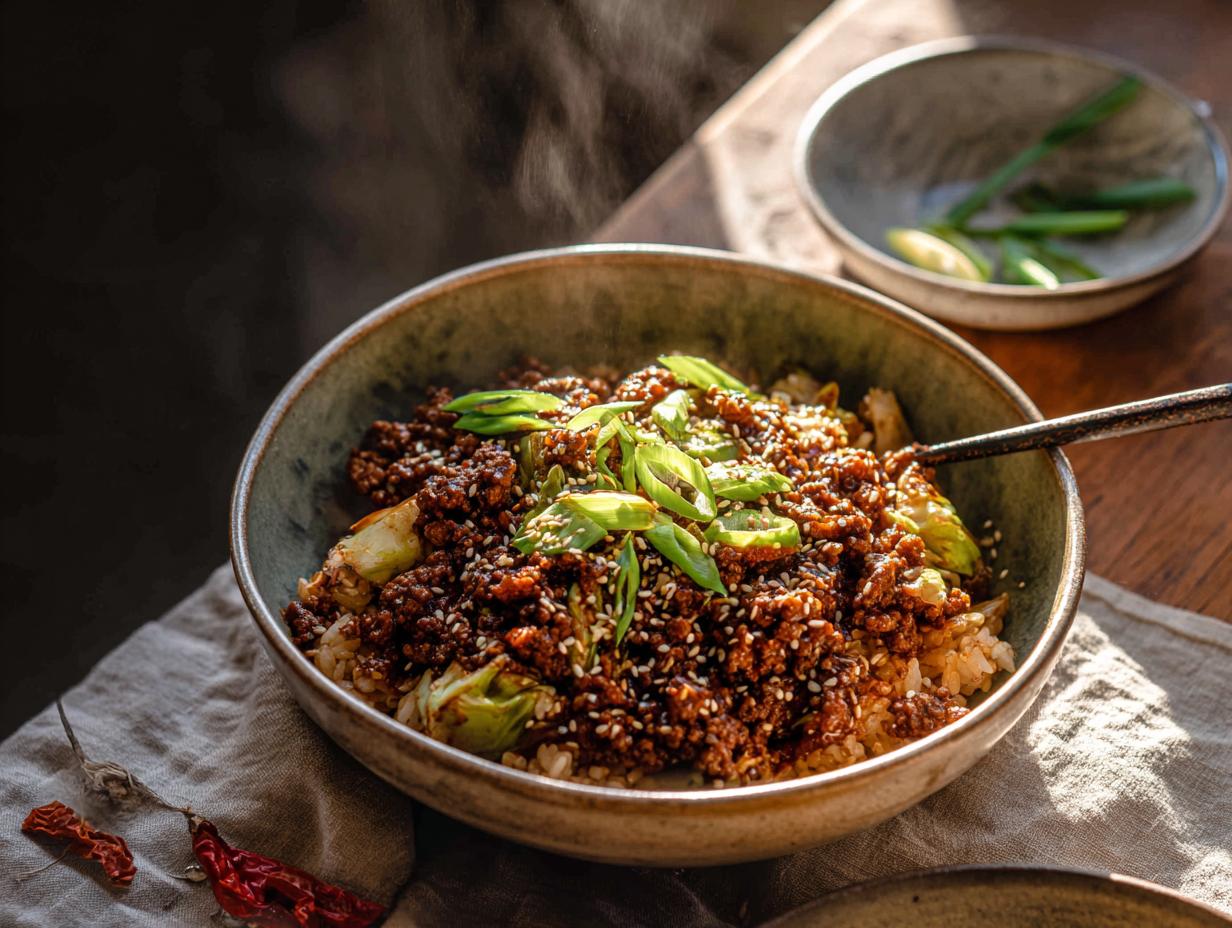
You know those nights when you want something incredibly flavorful but have zero energy to spend an hour in the kitchen? That’s exactly when I turn to these Korean Beef Cabbage Bowls with Gochujang. I first stumbled upon the magic of gochujang in a tiny Seoul market, and I’ve been obsessed ever since. This dish brings that bold, spicy-sweet kick to your table in just 25 minutes. The crunchy cabbage and savory beef create a satisfying, healthy meal that feels way more special than the effort it takes. Trust me, this is about to become your new weeknight hero.
Why You Will Love These Korean Beef Cabbage Bowls with Gochujang
- Ready in 25 minutes, start to finish. That means dinner on the table faster than takeout delivery, and I’m not exaggerating one bit.
- One-pan cooking at its finest. You won’t be juggling multiple pots and pans here. Just one skillet and you’re done. Plus, way less cleanup means more time to actually enjoy your evening.
- That bold, spicy-sweet gochujang kick. Trust me, once you taste how this Korean chili paste transforms simple ground beef, you’ll be keeping a jar in your fridge permanently. It’s smoky, savory, and just the right amount of addictive.
- Healthy without trying too hard. Lean beef packs in protein, while the cabbage brings all that wonderful crunch and fiber. It’s light enough to feel good about, but hearty enough that nobody’s reaching for snacks an hour later.
Ingredients for Korean Beef Cabbage Bowls with Gochujang
Here’s the beautiful thing about this recipe – you probably already have most of these in your kitchen. Let me walk you through what you’ll need:
- 1 pound lean ground beef (90/10) – the leaner the better, so you don’t have to drain too much fat.
- 4 cups finely shredded green cabbage – grab a head and shred it yourself for the best crunch.
- 2 tablespoons gochujang (Korean chili paste, not sauce) – trust me, the paste is where the magic lives.
- 2 tablespoons low-sodium soy sauce – keeps things savory without going overboard on salt.
- 1 tablespoon toasted sesame oil – that nutty aroma is everything.
- 2 large cloves garlic, minced and 1 teaspoon fresh grated ginger – the flavor base.
- 2 green onions, thinly sliced and 1 teaspoon toasted sesame seeds – for that pretty, tasty finish.
- Cooked jasmine or short-grain rice for serving – any rice works, but these soak up the sauce beautifully.
That’s it! Simple, fresh, and ready to become your new go-to.
How to Prepare Korean Beef Cabbage Bowls with Gochujang
Alright, let’s get cooking! In just 25 minutes, these gorgeous bowls will be on your table. Here’s how it all comes together.
Grab your largest skillet and heat it over medium-high heat. Toss in the ground beef and let it brown, breaking it apart as it cooks. Once it’s done, drain off the excess fat – just tilt the pan and spoon it out. Trust me, your taste buds will thank you later.
Now, push the beef to one side and add the garlic and ginger. Let them sizzle for exactly one minute until your kitchen smells absolutely incredible. Then stir everything together so the beef gets all that aromatic goodness.
Next comes the fun part. Stir in the gochujang, soy sauce, and sesame oil. Mix until every piece of beef is coated in that gorgeous, glossy red sauce. Honestly, it looks so good you might be tempted to eat it straight from the pan. I won’t judge if you do.
Finally, add the shredded cabbage right on top. Give it a good toss and cook for 3 to 4 minutes. You want it tender but still with a bit of crunch – that texture contrast is everything.
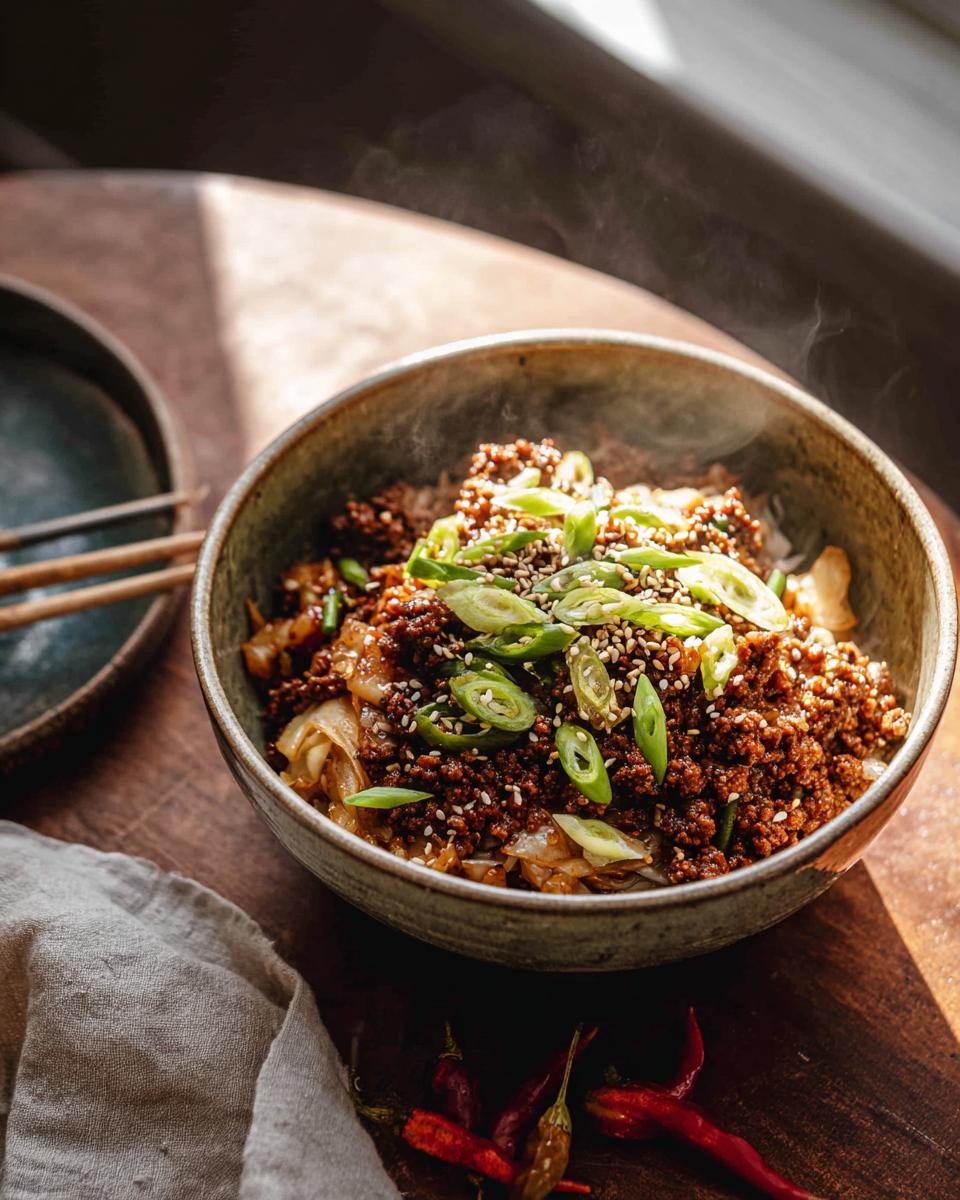
To serve, scoop a generous portion of rice into each bowl, pile on the beef and cabbage, and finish with green onions and sesame seeds. Serve immediately and enjoy every single bite!
Ingredient Notes and Substitutions
Let’s talk about gochujang for a second because it’s truly the star here. This fermented Korean chili paste is savory, sweet, and spicy all at once. You’ll find it in the international aisle of most grocery stores, or grab it at any Asian market. It keeps forever in the fridge, so it’s a great investment.
Don’t eat beef? No problem! Ground turkey or chicken work beautifully here. For a milder version, swap the gochujang for 1 tablespoon of miso paste mixed with 1 tablespoon of water – it’s still delicious, just not spicy. And if you need this to be gluten-free, use tamari instead of soy sauce.
For the cabbage, a sharp knife or mandoline gives you the best texture. But honestly? Pre-shredded coleslaw mix works great in a pinch when you’re short on time.
Tips for Perfect Korean Beef Cabbage Bowls with Gochujang
After making these bowls more times than I can count, I’ve got a few tricks worth sharing. First, don’t overcrowd the pan when you add the cabbage. Give it room to breathe so it turns crisp-tender instead of steaming into mush. High heat is your friend here – it keeps that lovely crunch intact.
Gochujang brands vary in heat, so taste as you go. If the sauce seems a little dry, splash in a tablespoon or two of water to loosen things up. And always taste before serving – sometimes just a touch more soy sauce makes all the difference.
Variations for Korean Beef Cabbage Bowls with Gochujang
Once you’ve got the base down, variations are endless! I love tossing in a cup of shredded carrots or some sliced bell peppers with the cabbage for extra color. Feeling fancy? Add a fried egg on top – the runny yolk mixing with that spicy sauce is pure heaven. Kimchi gives a fantastic fermented kick. Cutting carbs? Cauliflower rice works great. And a drizzle of sriracha mayo adds the creamiest finish!
Serving Suggestions for Korean Beef Cabbage Bowls with Gochujang
These bowls are honestly a complete meal on their own, but if you want to go the extra mile, I’ve got some favorites. Quick-pickled cucumbers or radishes add a bright, tangy crunch that cuts right through the spicy beef. Or toss sliced cucumbers with rice vinegar, sesame oil, and a pinch of salt for the simplest sesame cucumber salad. Feeling fancy? A light miso soup or steamed edamame on the side makes it feel like a real Korean feast.
Storage and Reheating Instructions
Got leftovers? Lucky you! Just pop the beef-cabbage mixture in an airtight container and stash it in the fridge for up to 3 days. Keep it separate from the rice though – trust me, nobody wants soggy rice ruining the party later. When you’re ready for round two, reheat the mixture in a skillet over medium heat with a splash of water. That little bit of steam brings everything back to life. Microwave the rice separately, and you’re good to go. Oh, and skip the freezer on this one – the cabbage gets mushy and sad.
Frequently Asked Questions
You’ve got questions, and I’ve got answers! Here are the things people ask me most about these Korean Beef Cabbage Bowls with Gochujang.
Can I make these Korean Beef Cabbage Bowls with Gochujang ahead of time?
Absolutely! This is actually one of my favorite meal prep recipes. Cook the beef and cabbage mixture completely, then let it cool down to room temperature. Store it in an airtight container in the fridge, and keep your rice and garnishes separate. When you’re ready to eat, just reheat the beef mixture, warm up your rice, and assemble everything fresh. The flavors actually get even better after a day or two in the fridge!
What can I use instead of gochujang?
No gochujang on hand? No worries! You can make a quick gochujang substitute by mixing 1 tablespoon of miso paste with 1 teaspoon of sriracha or some red pepper flakes. Another option is 1 tablespoon of sambal oelek with a pinch of sugar to mimic that sweetness. Just know the flavor won’t be exactly the same – gochujang has that unique fermented depth that’s pretty hard to replicate perfectly. But in a pinch, these will definitely get you close!
Is this recipe gluten-free?
Yes, it can be! Just swap the soy sauce for tamari or coconut aminos, and you’re good to go. Gochujang is often gluten-free, but you should always double-check the label because some brands do include wheat. It’s one of those things where you really want to verify each individual ingredient before serving if gluten is a concern for you or your family.
Can I double this recipe?
Definitely! This Korean ground beef recipe doubles beautifully. Just make sure you’re using a big enough skillet or pot – you don’t want to overcrowd the pan, or the beef won’t brown properly. If your pan isn’t huge, cook the beef in batches and then combine everything. The cabbage might need an extra minute or two since there’s more of it, but the ingredient ratios double evenly, so you don’t need to do any complicated math. Easy peasy!
Estimated Nutritional Information
Just to give you a rough idea, each serving of these Korean Beef Cabbage Bowls comes in at about 380 calories, 18g of fat, 28g of carbs, and a solid 26g of protein. Keep in mind these numbers are estimates – they’ll shift a bit depending on your exact brands and how generous you are with the rice. Don’t stress too much about it, though. Your body will thank you either way!
Did You Make This?
I’d love to hear how your Korean Beef Cabbage Bowls turned out! Leave a comment and a star rating, and tag me in your photos on social media. Can’t wait to see your delicious creations!
Print
Korean Beef Cabbage Bowls with Gochujang: 25-Minute Easy
- Total Time: 25 minutes
- Yield: 4 servings 1x
- Diet: Low Calorie
Description
A quick and flavorful meal with seasoned ground beef, crunchy cabbage, and a spicy gochujang sauce. Serve over rice for a satisfying bowl.
Ingredients
- 1 pound ground beef
- 4 cups shredded cabbage
- 2 tablespoons gochujang (Korean chili paste)
- 2 tablespoons soy sauce
- 1 tablespoon sesame oil
- 2 cloves garlic, minced
- 1 teaspoon grated ginger
- 2 green onions, sliced
- 1 teaspoon sesame seeds
- Cooked rice for serving
Instructions
- Heat a large skillet over medium-high heat. Add the ground beef and cook until browned, breaking it apart. Drain excess fat.
- Add the garlic and ginger. Cook for 1 minute until fragrant.
- Stir in the gochujang, soy sauce, and sesame oil. Mix well.
- Add the shredded cabbage. Cook for 3 to 4 minutes until the cabbage is tender but still crisp.
- Serve the beef and cabbage mixture over cooked rice. Garnish with green onions and sesame seeds.
Notes
- Use low-sodium soy sauce to reduce salt.
- Add a drizzle of honey if you prefer a sweeter sauce.
- For extra heat, add red pepper flakes.
- Prep Time: 10 minutes
- Cook Time: 15 minutes
- Category: Main Dish
- Method: Stovetop
- Cuisine: Korean
Nutrition
- Serving Size: 1 bowl
- Calories: 380
- Sugar: 6 g
- Sodium: 680 mg
- Fat: 18 g
- Saturated Fat: 6 g
- Unsaturated Fat: 10 g
- Trans Fat: 0 g
- Carbohydrates: 28 g
- Fiber: 4 g
- Protein: 26 g
- Cholesterol: 70 mg