
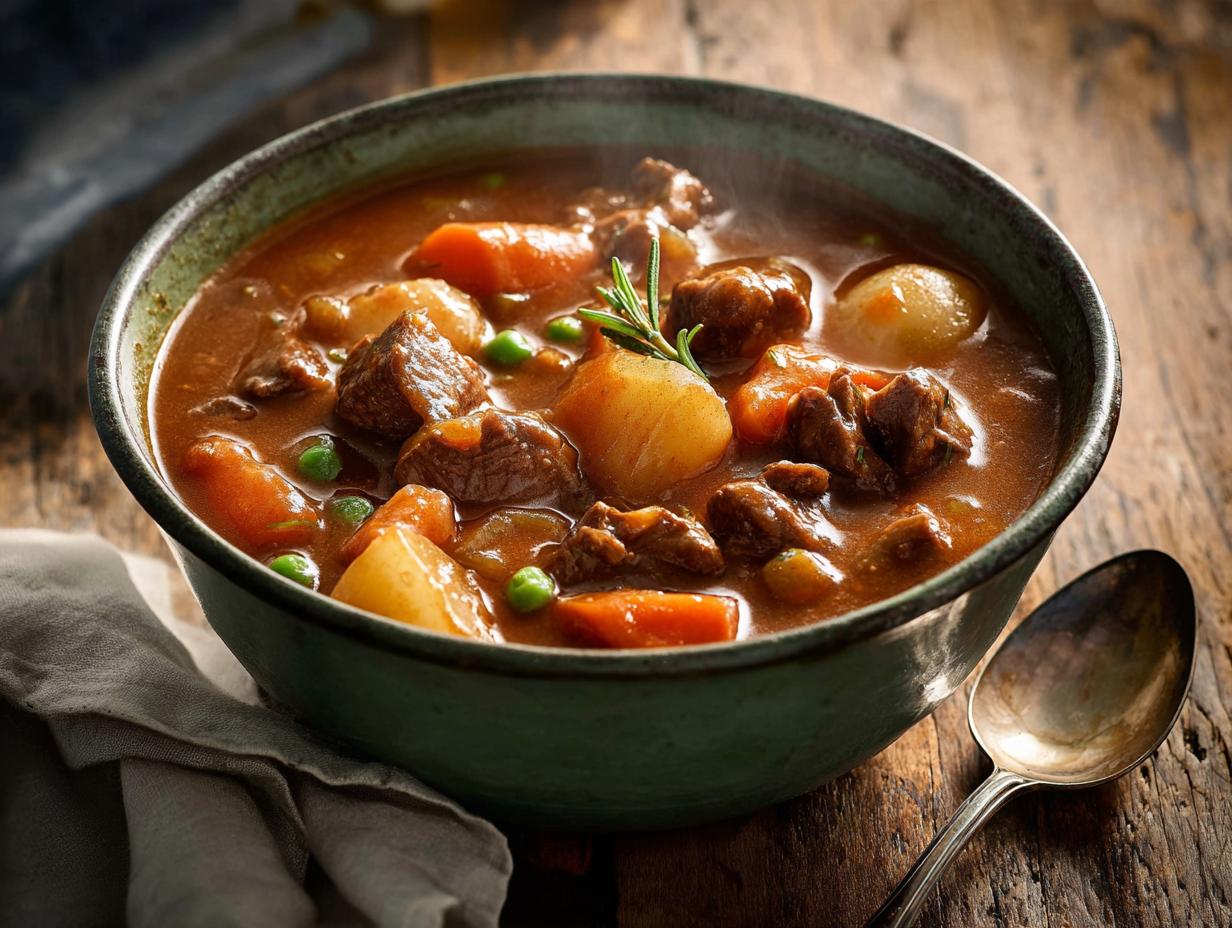
There’s nothing quite like a hearty bowl of Lamb Stew on a chilly evening. It’s the kind of meal that wraps you up like a warm blanket – rich, savory broth, tender chunks of meat, and soft vegetables all mingling together. I’ve been making this version for years, tweaking it until it was just right, and the best part? No bacon, no ham, no pork, and no alcohol. It’s naturally gluten-free too, so everyone at the table can dig in without worry. My family gathers around the pot the minute the aroma of thyme and rosemary starts floating through the house. This isn’t a fussy recipe; it’s the stovetop method that lets simple, clean ingredients shine.
Why This Lamb Stew Stands Out
Most stew recipes lean on bacon or pork for depth, but I wanted something that lets the lamb be the star. After lots of trial and error (and a few too-salty batches), I landed on this combination: just lamb, vegetables, and a rich gluten-free broth. No shortcuts, no mystery meat – you get pure, honest flavor from browning the meat well and letting time do its work. This is the stew I turn to when I want something truly satisfying without any hidden ingredients.
Why You’ll Love This Lamb Stew Recipe
This stew has become a regular in my kitchen, and once you try it, you’ll understand why. It’s the kind of recipe that does all the heavy lifting while you go about your day. Here’s what makes it a winner:
- One-pot meal: Everything cooks together in a single pot, which means less cleanup and more time relaxing.
- Tender lamb: That long, slow simmer breaks down the meat until it practically melts in your mouth.
- Rich, deep flavor: Browning the meat first builds layers of savory goodness that no shortcut can match.
- No special equipment: Just a sturdy pot and a wooden spoon – no slow cooker or pressure cooker required.
- Freezer-friendly: Make a double batch and stash some for busy weeknights. It reheats beautifully.
Honestly, this might be my favorite kind of cooking – simple, forgiving, and always impressive.
Ingredients for Lamb Stew
Let me walk you through what you’ll need. I keep this list pretty straightforward – no fancy stuff, just good, honest ingredients that work together. And yes, all measurements are level, not heaping – I learned that lesson the hard way!
- 1 lb lamb stew meat, cubed – Look for shoulder or chuck. It has a bit of fat that melts into the broth and makes everything rich. Don’t trim it all off.
- 2 tablespoons olive oil – For browning. You could use another oil, but olive adds a nice little flavor.
- 1 onion, diced – About 1 cup. I like yellow onions here, but any kind works.
- 2 carrots, sliced into ½-inch rounds – They hold up well during the long simmer and get sweet and tender.
- 2 celery stalks, sliced – Adds that earthy, savory note you expect in a good stew.
- 3 garlic cloves, minced – Fresh, always. The jarred stuff just doesn’t have the same punch.
- 4 cups gluten-free beef broth – Make sure it’s gluten-free if that matters to you. I use a good-quality brand, and it makes a difference.
- 2 potatoes, peeled and cubed – Yukon Gold or Russet are my go-tos. They break down just enough to thicken the broth a little.
- 1 teaspoon dried thyme – I use dried here because it stands up to the long cooking time without fading.
- 1 teaspoon dried rosemary – Crush it a bit between your fingers before adding to release the oils.
- Salt and pepper to taste – I start with about a teaspoon of salt and half a teaspoon of pepper, then adjust at the end.
- 1 cup frozen peas – Stirred in at the very end so they stay bright green and pop with sweetness.
- 2 tablespoons cornstarch mixed with 2 tablespoons water – This is optional. If you like a thicker stew, stir this slurry in at the end. If not, just leave it out.
That’s it – twelve simple ingredients, and you’re on your way to the coziest bowl of lamb stew. I love that nothing here is complicated or hard to find. Everything comes together in one pot with just a little patience and love.
How to Make Lamb Stew Step by Step
Okay, let’s get cooking. This is the kind of recipe that fills your kitchen with the most incredible smell, and the steps are simple but important. I’ll walk you through each part so you can nail it on your first try.
Brown the Lamb
First things first – get that pot hot. Add your olive oil and let it shimmer over medium heat. Then add the lamb cubes in a single layer, working in batches if you need to. Crowding the pot steams the meat instead of browning it, and we want those deep, caramelized bits on the bottom of the pot. Let them sit untouched for 2-3 minutes per side until they’re nice and dark. Scoop them out onto a plate and set them aside. Don’t worry if some bits stick to the pot – that’s pure gold for flavor.
Sauté the Vegetables
Now, in that same pot (with all those lovely browned bits still hanging around), toss in the diced onion, sliced carrots, and celery. Cook them for about 5 minutes, stirring now and then, until the onions turn soft and translucent. The fond on the bottom will start to release as the vegetables release their moisture. Then add the minced garlic and cook for just 1 minute more – you’ll smell it when it’s ready. Careful, garlic burns fast, so keep it moving.
Simmer the Stew
Return the lamb to the pot, along with any juices that collected on the plate. Pour in the beef broth, add the cubed potatoes, dried thyme, and rosemary, plus a good pinch of salt and pepper. Stir everything together. Bring it to a gentle boil, then immediately reduce the heat to low. Cover the pot and let it simmer for 1½ hours. I like to peek in about halfway and give it a stir, just to make sure nothing’s sticking. You’ll know it’s ready when the lamb is fork-tender and the potatoes are soft. That low, slow simmer is where the magic happens.
Finish and Thicken
When the timer goes off, stir in the frozen peas. Let them heat through for about 5 minutes – they should stay bright green and pop with sweetness. If you want a thicker stew, now’s the time. Whisk the cornstarch slurry (cornstarch and water) together in a small bowl, then pour it into the pot while stirring. Let it cook for 2 minutes, and you’ll see the broth turn glossy and thicken up nicely. If you’d rather skip the slurry, just mash a few potatoes against the side of the pot – that releases their starch and thickens things naturally. Taste and adjust the salt and pepper at the end. Serve it up hot and watch everyone dig in.
Tips for the Best Lamb Stew
A few little tricks can really elevate this stew from simple to spectacular. Don’t skip the fat on the lamb – it melts during cooking and adds richness you just can’t get any other way. And please, brown the meat well. I know it takes a minute, but those caramelized bits on the bottom of the pot are pure gold.
Let the stew rest for about 10 minutes before serving. I know it’s tempting to dive right in, but the flavors really settle and meld. Always adjust the salt at the very end – broths concentrate as they simmer, so a little pinch at the finish line does wonders.
The cornstarch slurry is totally optional. Honestly, I often just mash a few of the potatoes right against the side of the pot to thicken the broth naturally. If you find your stew is a little thinner than you’d like, leave the lid off for the last 10 minutes of simmering. It’ll reduce and concentrate beautifully.
Variations and Substitutions for Lamb Stew
One of the things I love about this stew is how flexible it is. Don’t have beef broth? No problem – lamb broth or even vegetable broth work beautifully. They change the flavor a little, sure, but that’s part of the fun. I’ve used both, and honestly, I can’t pick a favorite.
Feel like mixing up the vegetables? Toss in some parsnips or turnips with the carrots and celery. They add a lovely earthy sweetness that fits right in. If you’ve got fresh thyme and rosemary on hand, go ahead and use them – just double the amount since dried herbs are more concentrated. For a thicker stew without the cornstarch slurry, I often just mash a few of the cooked potatoes right against the side of the pot. It’s a trick my mom taught me, and it works like a charm.
And here’s the thing – this recipe naturally skips any pork or alcohol, so there’s nothing to worry about there. It’s clean, straightforward, and easy to adapt without losing that hearty lamb stew character.
Serving Suggestions for Lamb Stew
This stew is pretty complete on its own, honestly – it’s a whole meal in a bowl. But if you want to round it out, my favorite way to serve it is with a thick slice of crusty bread to soak up every last drop of that rich broth. Mashed potatoes work beautifully too, or even a scoop of fluffy rice. I love tossing together a simple green salad with a lemony vinaigrette on the side – the brightness cuts through the richness just right. And don’t forget a sprinkle of fresh parsley on top. It adds a pop of color and a little freshness that makes everything feel special.
Storing and Reheating Lamb Stew
This stew actually gets even better the next day, if you can believe it. Store any leftovers in an airtight container in the fridge – they’ll keep for up to 3 days. When you’re ready to eat, just reheat it on the stovetop over low heat, adding a splash of broth or water if it’s thickened up too much. You can freeze it too, for up to 3 months. I usually thaw it overnight in the fridge before reheating. It’s one of those meals that’s almost better made ahead, honestly.
Frequently Asked Questions About Lamb Stew
I get asked about this stew a lot, especially when folks are making it for the first time. So here are the answers to the questions that pop up most often. If you’re wondering something I didn’t cover, just drop a comment and I’ll help you out.
Can I use lamb shoulder for this stew?
Absolutely – in fact, lamb shoulder is my top pick. It’s got just the right amount of fat and connective tissue that breaks down during that long simmer, making the meat incredibly tender. You can use chuck too, but shoulder has a bit more flavor. Just ask your butcher to cube it for you if you don’t feel like doing it yourself. Either way, you’re in for a treat.
Can I make this in a slow cooker?
Yes, you can! I actually do this sometimes on busy days. You’ll still want to brown the lamb and sauté the vegetables on the stovetop first – that step isn’t negotiable if you want that deep, rich flavor. Then just transfer everything (except the peas and cornstarch slurry) to your slow cooker and cook on low for 6 to 8 hours. Stir in the peas and slurry at the end, let it thicken for a couple minutes, and you’re good to go. It turns out just as hearty as the stovetop version.
How do I make it thicker?
You’ve got two easy options. The cornstarch slurry (2 tablespoons cornstarch mixed with 2 tablespoons cold water) stirred in at the end works like a charm – just give it 2 minutes to thicken. Or, my personal favorite, mash a few of the cooked potatoes right against the side of the pot. That releases their starch and thickens the broth naturally without any extra ingredients. Either way works great.
Is this stew gluten-free?
Yes, it is! As long as you use a gluten-free beef broth and cornstarch (which is naturally gluten-free), this recipe is safe for anyone avoiding gluten. No flour, no wheat, no fuss. I always double-check my broth labels just to be sure.
Lamb Stew Nutritional Information
If you’re curious about what’s in a bowl, here’s the rough breakdown. One serving (about 1½ cups) comes in around 450 calories, with 25g of fat, 30g of protein, and 30g of carbs. That’s based on the ingredients I typically use—your numbers might shift a little depending on the exact potatoes or broth brand you pick. I always figure these are ballpark estimates, not exact. The important thing is that it’s hearty, satisfying, and made with real food. So ladle yourself a big bowl and enjoy it without overthinking the math.
Share Your Lamb Stew Results
I’d love to hear how this stew turned out in your kitchen! Drop a comment or a star rating below, and if you snap a photo, tag me on social media – nothing makes my day like seeing your bowls of cozy lamb stew.
Print
Lamb Stew: 1 Pot of Rich, Tender Goodness
- Total Time: 1 hour 50 minutes
- Yield: 4 servings 1x
- Diet: Gluten Free
Description
A hearty lamb stew with vegetables, cooked slowly on the stovetop. No alcohol, bacon, ham, or pork used.
Ingredients
- 1 lb lamb stew meat, cubed
- 2 tablespoons olive oil
- 1 onion, diced
- 2 carrots, sliced
- 2 celery stalks, sliced
- 3 garlic cloves, minced
- 4 cups beef broth (gluten free)
- 2 potatoes, peeled and cubed
- 1 teaspoon dried thyme
- 1 teaspoon dried rosemary
- Salt and pepper to taste
- 1 cup frozen peas
- 2 tablespoons cornstarch mixed with 2 tablespoons water (optional, for thickening)
Instructions
- Heat olive oil in a large pot over medium heat.
- Add lamb cubes and brown on all sides. Remove and set aside.
- In the same pot, sauté onion, carrots, and celery for 5 minutes.
- Add garlic and cook for 1 minute.
- Return lamb to the pot. Add broth, potatoes, thyme, rosemary, salt, and pepper.
- Bring to a boil, then reduce heat to low. Cover and simmer for 1.5 hours, until lamb is tender.
- Stir in frozen peas and cook for 5 more minutes.
- If you want a thicker stew, stir in the cornstarch slurry and cook for 2 minutes until thickened.
- Serve hot.
Notes
- You can substitute beef broth with lamb or vegetable broth.
- For a thicker stew without cornstarch, mash some potatoes against the pot.
- Store leftovers in the fridge for up to 3 days.
- Prep Time: 20 minutes
- Cook Time: 1 hour 30 minutes
- Category: Stew
- Method: Stovetop
- Cuisine: American
Nutrition
- Serving Size: 1 bowl (about 1.5 cups)
- Calories: 450
- Sugar: 5g
- Sodium: 800mg
- Fat: 25g
- Saturated Fat: 8g
- Unsaturated Fat: 15g
- Trans Fat: 0g
- Carbohydrates: 30g
- Fiber: 4g
- Protein: 30g
- Cholesterol: 80mg